• Skip to primary navigation
  • Skip to main content
  • Motherhood
    • Mom Life Hacks
    • Pregnancy Life
  • Routines
    • Baby Routines
    • Toddler Routines
  • Family Travel
    • Disney Planning
    • Free Family Vacation Planning
  • Contact
    • About

Mastering Mom Life

Routines for littles made easy!

Family Travel (old)

Easy Step by Step Tear-Free Baby Bath Routine

Baby Routines

Baby bath routine: baby in pink towel

Inside: Learn a simple, tear-free baby bath routine to help you easily clean your little one while encouraging parent/baby bonding so you and your little one enjoy bath time!

It’s time to get your little bundle of joy all squeaky clean!

Bathing your baby can seem a little intimidating at first, especially for new parents. Your little one seems so fragile and helpless and the last thing you want to do is disrupt or hurt her.

Trust me I’ve been there!

Even for my second babies I was a wreck trying to bathe her because I thought I would somehow hurt her tinnee, tiny little body.

Once you get the all-clear from your doctor to start bathing your baby, bath time can be a really fun bonding time between you and your sweet little one.

I’ll teach you a super simple, tear-free baby bath routine to help you easily make sure your baby is being cleaned properly and encourages parent/baby bonding. So both you and your baby will enjoy bath time!

No time to read this now? That’s okay! Download the FREE Baby Bath Routine Cheatsheet to get this step by step routine (+ awesome baby bath tips & tricks) sent straight to your email!

There’s nothing sweeter than seeing your sweet little baby look up at you with those big Disney-like cartoon eyes. This precious baby is dependent on you for everything, and you have the most important job in the world– being a parent.

But caring for your little one doesn’t have to be overwhelming…Let’s dive into baby bath time!

When Can Baby Take a Bath Every Day?

A baby can take their first bath after his/her umbilical cord falls off (usually 10-14 days after birth). Before then, just wipe down your baby with a warm washcloth and keep the umbilical cord dry.

After the umbilical cord falls off, feel free to give your baby his/her first bath!

You can just use water for those newborn days (or a mild soap if needed).

For the first few months of life, your baby only needs a bath about 3 times a week, or when needed.

After about 4 months if your baby enjoys a taking baths you can start adding more baths to your week.

There is no concrete answer to know “when” your baby can start taking baths every day, but between 5-6 months I found that my babies enjoyed baths every day the most.

It also became a part of our bedtime routine which helped them sleep longer and better, so that was a major plus!

Talk to your child’s pediatrician about bathing before making significant changes to your bathing schedule.

But you do NOT have to give your baby a bath every day to enjoy the benefits of a baby bath routine.

(This is a great article all abut how often you can bathe your baby.)
When Can I Start a Baby Bath Routine?

You can start a baby bath routine as soon as you begin giving your baby baths. The routine will change a bit as your child grows and develops (a newborn bath routine will be slightly different from a one-year-old bath routine).

But not matter what your baby’s age is, each part of the baby bath routine will remain the same! You just slightly alter the details based upon your baby’s age. And I’ll show you exactly how to do this too.

Why is a Bath Routine Important?

You may have heard it before but- babies thrive on routines. The more consistency and predictably a baby has in their day, the better.

Adding a bath routine to your day doesn’t HAVE to be make or break but it does add a bit of reinforcement to the structure of your evening before baby’s bedtime.

Establishing a simple and quick bath routine also helps your baby wind down and prepare for nighttime sleep.

Side Note: Differentiating between daytime and nighttime sleep is a huge part of your baby learning to sleep through the night. With daytime sleep, you wake up within 1-2 hours. However, with nighttime sleep, you stay asleep until feedings are needed or until baby is developmentally ready to sleep until morning.

Also, the routine doesn’t have to be long or strenuous 20 step plan. It can be as simple and to the point as you wish.


Related Reading!

Importance of a baby bedtime routine to help your baby sleep longer and better!

Use Bath Time to Connect

Don’t forget, you can use your baby’s bath time as a way to further connect with your little one.

Bath time is private- intimate. Only you (and other caregivers you allow) are allowed to give your baby a bath because you are entrusted to clean and care for this sweet baby so they can continue to healthy grow and thrive.

Your baby’s hygiene is such a crucial part of maintaining your child’s health and your baby’s bath is a special time to connect with him/her! You can sing songs, play different bath games, and so much more.

If you can, try to unplug from your phone or from the other daily responsibility of your household and give your baby undivided attentions to further make those special bonds.

As an Amazon Associate I earn from qualifying purchases. Please view Mastering Mom Life’s Terms, Disclosure & Disclaimer Policy and Privacy Policy. I wholeheartedly believe in all of the products I recommend and use them all! 

Bath sponge and towel

Baby Bath Essentials

The simple “let’s throw the baby in the sink for a quick wash” days are longgg gone.

If you’ve walked into a Target or Buy Buy Baby recently you’d see there are hundreds of different baby products- just to give your baby a bath!

It’s quite insane.

The good news is, you don’t need the latest, trendiest, expensive baby bath product to give your baby a good ol’ bath.

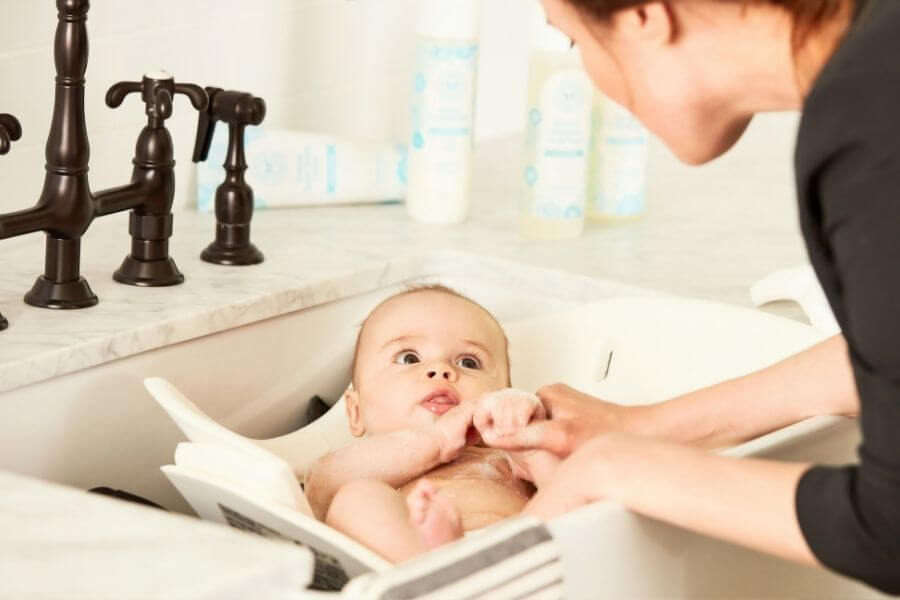
All you need to do is first figure out where you’re going to bathe your baby and then you’ll know what baby bath essentials you need. (sink, tub, bottom of the shower, etc.)

Here’s a list of minimal things I use that are the bare necessities:

  • For bathing your baby in the sink- Flower bath insert (I’ve used this one before and it’s so soft, fits multiple sinks, cleans & dries well, and is easy to store)
  • For bathing your baby in a traditional tub- Infant to Toddler Convertible Baby Tub (I’ve used this one for both of my babies and I love it because it grows with your little one, is lightweight, and easy to clean)
  • Thin washcloths- I use these washcloths because they are super gentle on your baby’s skin and don’t get that yucky “mildewy” smell.

After each bath, I clean the washcloths in the sink and let them air dry until the next day. Every 3 baths, I’ll throw them in the washer/dryer and rotate them. That way you don’t need to buy 25 washcloths.

Mom Tip: After each bath, I clean the washcloths in the sink and let them air dry until the next day. Every 3 baths, I’ll throw them in the washer/dryer and rotate them. That way you don’t need to buy 25 washcloths.

  • Mild, natural soap- I personally use the Baby Dove Sensitive Wash and Aveeno Baby Oat Extract Hypoallergenic Soap. Every few weeks I switch between soaps.
  • Bath toys (usually for babies older than 8 months)- I’m not a fan of the squirt toys for younger babies because of the mold that can sometimes grow within the toy. But some squirt toys open so you can properly clean them!

6 Step Easy Baby Bath Time Routine

1. Setting the water

The water temperature is one of the most important parts of preparing your baby’s bath. Too hot and your baby’s skin could minorly burn. Too cold and your baby could catch a chill.

But don’t let the water temperature stress you out too much! (As a new mom it took me like 10 minutes to find “the perfect” bath temperature and I was freaking out)

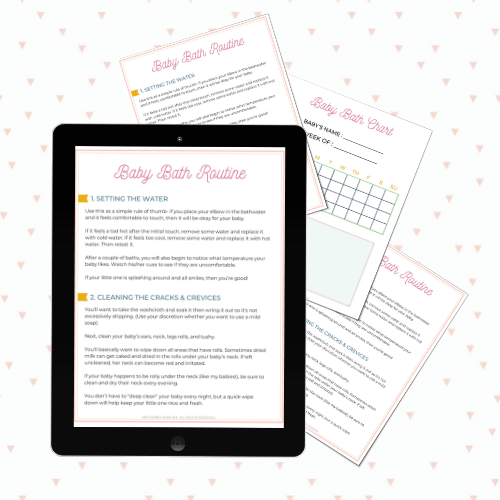
Use this as a simple rule of thumb- if you place your elbow in the bath water and it feel comfortable to touch, then it will be okay for your baby.

If it feels a tad hot after the initial touch, remove some water and replace it with cold water.

If it feels too cool, remove some water and replace it with hot water.

Then retest it.
Baby bath routine

After a couple of baths, you will also begin to notice what temperature your baby likes. Watch his/her cues to see if they are uncomfortable.

If your little one if splashing around and all smiles, then you’re good!

If you are still a bit anxious about the water temperature, you can purchase a baby bath water thermometer that you drop in the water and will tell you when the temperature is suitable for a baby.

2. Cleaning the cracks & crevices

Now that the temperature is good and the baby is acclimated to the bath, it’s time to scrub a dub dub!

You’ll want to take the washcloth and soak it then wring it out so it’s not excessively dripping. (Use your discretion whether you want to use a mild soap)

Next, clean your baby’s ears, neck, legs rolls and tushy.

You’ll basically want to wipe down all areas that have rolls. Sometimes dried milk can get caked and dried in the rolls under your baby’s neck. If left uncleaned, her neck can become red and irritated.

If your baby happens to be rolly under the neck (like my babies!), be sure to clean and dry their neck every evening.

You don’t have to “deep clean” your baby every night, but a quick wipe down will help keep your little one nice and fresh.

If your baby recently had a diaper mishap (aka – a poop blow out), be sure to wipe down their private parts gently but well to remove any residue.

Mom Tip: Use this time to also inspect your little one and make a note of any other things you have to take care of for their proper hygiene such as trimming their nails, applying special lotion for dry skin, cleaning their ears, etc

.

3. Cleaning hair

Now we’re on to the hair…

Take the wash cloth and gently scrub your baby’s hair in circle. This will also help if your baby is experiencing cradle cap. Use your discretion whether to use soap or not based on how many baths your baby was given that week so far.

Some parents use a baby visor to keep the water out of the baby’s eyes when cleaning their hair.

But I simply tilt my baby’s head back a tiny bit and put one hand on her forehead (like a dam) to keep the water from dripping down her face.

Mom Tip: At any point, if your baby starts crying or pretesting the bath, you can stick a toy or something fun to the shower wall so when your baby looks up, they are entertained.

Works every time!

4. Adding fun to the baby bath routine

Now that the cleaning portion of the bath is over, it’s time for the fun!

Sing bath songs, show your baby some colorful toys- if your baby is old enough, you can use this time as an educational opportunity. Count toes, name body parts, play peek a boo.

You can begin to make bath time fun as early as 3 months!

5. Getting dried

Take the towel and place it face up on your chest. Pick baby up from the bath and place baby’s back on your chest, then wrap your baby in the towel.

Bring your baby to a safe, flat surface (such as a changing table or a bed) and dry baby off.

Remember to never leave your baby unattended on any surface!

Dry off your baby’s hair, legs, arms, and be sure to get all the cracks and crevice’s. Let your baby dry off a but and get some air before putting on their diaper and clothes

You can use this time to use a soft, natural, mild lotion or oil and gently massage your baby.

This is a great way to help your baby wind down and prepare for bedtime.

A word about sensitivities: at any point if you notice your baby’s skin becoming irritated, red, slightly inflamed, or bumpy, immediately stop any use of soaps or lotions and contact your pediatrician.

Sometimes one ingredient can be the culprit to your baby’s discomfort. But your pediatrician will be able to better advise you.

I use this organic massage oil after every bath

6. Getting dressed

It’s pajama time! For nighttime, dress your baby in comfortable, breathable clothing. If you are still swaddling, a simple onesie under the swaddle is fine. If your baby sleeps with their arms and legs out, a footie or 2-piece pj set is great.

Be sure your baby is staying cool and comfortable throughout the night.

Extra- 7. Preparing for bed

Your baby is now bathed, dried, dressed and ready for your bedtime routine.

This is a great time to offer a feeding before bed, sit & cuddle, read a book, etc.

Complete your bedtime routine and your little one is now ready for sleep!

Download the Baby Bath Routine Cheatsheet!

Want to keep this routine to refer back to later? I got you!

Get the instant download of this step-by-step routine (+ awesome baby bath tips & tricks) sent straight to your email! A 5-page printable download you can save to your phone or you can print 🙂

Recap:

By using these 6 simple steps you can create your own baby bath routine that promotes baby and parent bonding while also getting your baby nice and clean.

Keeping up with your child’s hygiene is an important part of their healthy growth. But as you’ve seen, it doesn’t have to be stressful!

Now when your baby looks up at you with those big Disney doe-eyes, know that you are the best parent for this baby and you are doing an amazing job.

You got this mama!

Always With Love, Brianna

Check out these other posts with baby tips & tricks!

Why a steam bath is a miracle for your baby’s cough and cold
Baby Schedule Collection Free Printables

Please know that I am not a doctor or physician and I am not medically trained. All tips and advice given is based on my own experience and given to me by my own pediatrician. If you have any questions or concerns, please contact your doctor. This post is solely to offer encouragement from my experience and not designed to offer medical advice or treatment.

May 18, 2021 · Leave a Comment

The Best 3 Month Baby Schedule to Make Naps, Feedings & Play Easy

Baby Routines

3 month baby schedule

Inside: Learn how to create a flexible, easy 3 month baby schedule that will encourage healthy growth and development by following your baby’s cues.

You’ve officially hit the 3 month milestone- congratulations!

Your little one is leaving the “squishy, wrinkly newborn” phase and quickly entering the “chubby cheek, I want to smile all the time” baby phase—my favorite one 🙂

The 3 month milestone is a big one, as your baby is beginning to learn different routines and becoming acquainted with the stead patterns of feedings and naps.

Your little “I want to sleep all day newborn” is learning the world more and more each day and going through developmental spurts- which means their habits will start to shift.

Some 3 month old changes include:

  • Longer wake times
  • Increased feedings
  • Different nap lengths
  • Playtime alertness
  • Routine awareness

But don’t let these changes overwhelm you!

The best 3 month baby schedule to make feeding and naps easy

By following your baby’s cues I’ll teach you how to create a flexible 3 month baby schedule that will healthily encourage your baby’s growth & development AND that will help you feel confident caring for your little one.

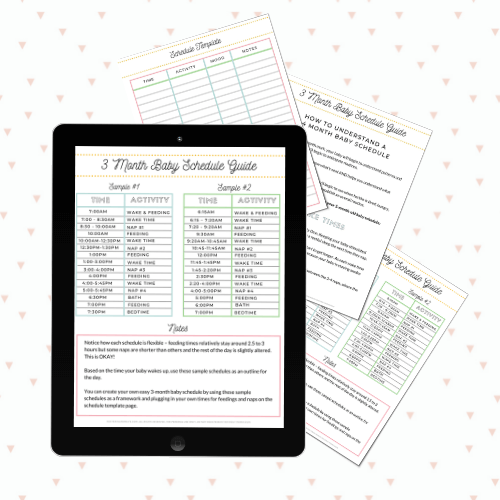
FREE Instant Download: Easy 3-4 Month Baby Schedule Guide

No time to read this now? That’s okay!

Instantly download the FREE 3 Month Baby Schedule Guide to get these sample schedules and golden nuggets of baby schedule tips sent straight to your inbox!

How to Create an Easy 3 Month Baby Schedule

As a new mom, I was super intimidated by the term “baby schedule”.

Did that mean if my baby ate 20 minute after her “schedule time” it would ruin the day?

Did I have to follow a schedule down to the very minute?

The thought of a schedule seemed super stressful and I wanted a more laid back, go with the flow approach to parenting… (while still keeping some sort of structure).

Here’s the good news- you can create your own baby schedule that is flexible and that works for YOU and your baby.

Some families have other siblings that need to be dropped off at school at 7am, so a 8am baby wake time won’t work for them. Some parents need to work at night so a 9pm baby bedtime won’t work.

By creating a schedule that is flexible to your family’s needs but that is also meeting your baby where he/she is developmentally will help you care for your little one in the best and easiest easy possible.

Here are the 3 components of a baby schedule you absolutely need:

  • Feedings
  • Sleep
  • Wake time
How to create an easy and flexible 3 month baby schedule

3 Steps to Create Your Own Baby Schedule

1. Track your baby’s daily actions and mood for 3 days.

Set aside 3 days to track your baby’s actions. When does he eat? When does she start getting tired? How long does he sleep? How long does she play?

By tracking these actions for 3 days you’ll be able to see an overall routine that your baby is doing.

2. Use that pattern to create a schedule

Babies naturally fall into a routine (just like adults!). We eat, sleep, and live our daily life within the same structure from day to day.

By seeing their sleep, wake, and eat patterns, you can create a schedule that will help them limit their fussy times.

By using this method, you’re not forcing your child on a schedule that doesn’t work for them. You’re leaning into the turn of their natural body clock.

3 month baby schedule guide and baby tracker

Use this FREE Baby Daily Tracker to help you complete these steps stress-free. Track your child’s naps, feedings, moods, and activities all in one place. Then you can easily start to see their routine so you can know without a doubt their golden wake window 🙂

Get the FREE Tracker in the 3 Month Baby Schedule Guide now!

Sample Easy 3 Month Baby Schedule: Overall Daily Schedule

Example 1
7:00am Wake & Feeding
7:00am – 8:30 Wake Time
8:30 – 10:00am Nap #1
10:00am Feeding
10:00am-12:30pm Wake Time
12:30pm-1:30pm Nap #2
1:00pm Feeding
1:00-3:00 Wake Time
12:30pm-1:30pm Nap #2
3:00-4:00pm Nap #3
4:00-5:45 Wake Time
4:00pm Feeding
5:00-5:45 Nap #4
6:30 Bath
7:00pm Feeding
7:30 Bedtime
Example 2
6:15am Wake & Feeding
6:15am – 7:20 Wake Time
7:20 – 9:20am Nap #1
9:30am Feeding
9:20am-10:45am Wake Time
10:45pm-11:45pm Nap #2
12:00pm Feeding
11:45-1:45pm Wake Time
1:45-2:20pm Nap #3
2:20-4:00 Wake Time
2:30pm Feeding
4:00-5:00 Nap #4
5:00-6:30pm Wake Time
5:00 Feeding
6:00 Bath
6:30pm Feeding
7:00 Bedtime

(Notice how each schedule is flexible – feeding times relatively stay around 2.5 to 3 hours but some naps are shorter than others and the rest of the day is slightly altered. This is OKAY!)

Based on the time your baby wakes up, use my personal sample schedules (the ones above!) as an outline for the day.

You can create your own easy 3 month baby schedule by using these sample schedule as a framework and plugging in your own times for feedings and naps.

Download the FREE Easy 3-4 Month Baby Schedule Guide to:
  • instantly download these sample schedules
  • AND receive a blank schedule template for you to create your own baby schedule

How to understand a 3 month baby schedule

Beginning at the 3-4 month mark, your baby will begin to understand patterns and habits- in a nutshell, they’ll begin to anticipate routines.

Routines help let your baby know what’s next AND helps you understand what your baby needs next.

When you follow your baby’s cues you’ll begin to see when he/she is tired, hungry, playful, etc. Then you use these cues to establish an overall routine.


RELATED READING

Schedule for Your Baby | The Importance of a daily schedule for your baby | mom life hacks | baby tips | #parenting #motherhood

Here are the 4 main factors to understand in your 3 month old baby schedule:

1. Longer Wake Times

Wake time consists of a feeding and activity time. Keeping your baby stimulated during this time can help ensure they have a restful sleep the next time they nap.

As your baby grows, her/his wake time will start to get longer. As each wake time gets longer, naps will eventually be dropped because your baby is staying awake for a longer period between each nap.

During the 3-4 month phase, your baby will be in between the 3-4 naps, where the 4th nap gets dropped around 5-6 months.

2. Increased Feedings

Around this time is where babies usually begin to increase the amount they are eating each feeding. Accomplishing a full feeding is not only important for your baby’s growth but can also help your baby achieve better sleep.

Read this article here all about how to accomplish full feeding and create an easy full feeding schedule that follows your baby’s hunger cues!

4 keys to create the best 3 month baby schedule
3. Different Nap Lengths

It’s important to offer your baby a nap 60-90 minutes from the last time they woke from their prior nap.

Between 3-4 months, some babies can even begin to reach 90-120 minute wake windows.

That’s why it’s important to know your baby’s sleep cues. By catching your baby before they reach the “full-on baby down” tired stage, you can prevent your little one from getting overtired and disoriented, which hinders naps.

Some tired baby cues are:

  • Staring off into space
  • Rubbing eyes
  • Yawning
  • Red eyebrows
4. Playtime Alertness

At this stage, your baby is becoming more aware of his surroundings. Your baby isn’t too small to play!

Use wake time to play:

  • In front of the mirror
  • With finger puppets
  • Splash toes in water

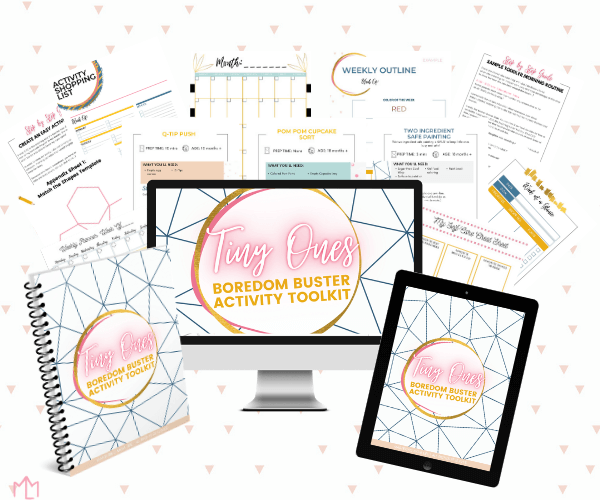
If you’re struggling with what to do when your baby is awake, check out my Tiny One’s Boredom Buster Activity Toolkit.

It’s filled with activity guides for babies 3 months to 3 years old- so this guide can GROW with your little one!

I created it to help parents plan easy, cheap, educational activities that promote developmental growth and independent play as well as parent bonding.

Learn more about the Boredom Buster Activity Toolkit HERE!

FAQ’s

What is a sample 3 Month Old Bottle Schedule?

At this age, your baby should be eating every 2.5 to 3 hours.

If you are struggling with feedings, be sure to talk to your child’s pediatrician about any concerns that you have (such as the baby not going longer than 2 hours between feedings)

Sometimes feedings can take longer than others so don’t worry too much about how long it takes for your baby to eat at this age. Your baby is still learning!

My first child drank her bottle within 30 minutes. My second took about an hour nursing every feeding.

Just be sure to watch your child’s wake window and offer a nap every 60-90 minutes to prevent your baby from getting overtired and cranky.

(The key is to make sure your baby is accomplishing full feedings. Read all about how to make sure your baby is feeding to get full here!)


RELATED READING

Full Feeding Schedule | Feeding to Get Your Baby Full | Baby Tips | Feeding Schedule | Mom Life Tips | #momadvice #parenting

Here is a sample 3 month old feeding schedule:

7:00am- 4-5 oz

10:00am- 4 oz

12:30pm-4-5 oz

3:00pm- 4 oz

6:00pm- 4 oz

8:30- 5 oz

(dream feed if needed at 10:00)

*Then you feed your baby as needed if they wake for night feedings

(Notice how some feedings were 3 hours between and some were 2.5 hours between. Count the next 3 hour window from when your child begins eating the last feeding)

At this age my children were beginning to go from 9:00pm to 5:00am without a feeding but every child is different so be sure to meet your baby where he/she is!

Best Bottle Feeding Tips to Help Prevent Gas

Should I Follow “Eat, Wake, Sleep”?

In my personal experience of parenthood, my children never truly followed an eat, wake, sleep schedule.

As long as you are following your own daily routine of feedings, naps and wake time your child should be falling into their own groove of a natural “eat, wake, sleep” cycle.

Let me explain…

Let’s say you fed your child at 10:00am and then put him down for a nap at 11:00am. He slept for 50 minutes. Now it’s 11:50am and you know your baby won’t start to show hunger cues until about 12:45ish. You have a whole hour of wake time with your baby BEFORE they are eating. Which mean that when they eat, they’re wake window will be ending and they will go to sleep right after eating.

In this scenario, you followed a “sleep, *wake*, eat” cycle.

For the rest of the day your schedule might look like a “eat, sleep, wake” cycle.

And that’s okay!

As your baby continues to grow there won’t be a strict schedule that you need to follow. So don’t worry yourself too much about following schedules like this just yet.

For a 3 month old, as long as you are following an overall healthy routine of feedings every 3 hours and naps every 60-90 minutes, your child will fall into a schedule naturally.

Don’t Forget- Download the FREE 3-4 Month Baby Schedule Guide!

Get instant access to the FREE Easy 3-4 Month Baby Schedule Guide.

Instantly download this 6 page guide that includes:

  • these sample 3 month schedules
  • a baby tracker to help you track your baby’s activtyes and cues
  • a schedule template to help you create your own flexible baby schdudle

Get the FREE GUIDE HERE!

Recap:

As you enter the 3-4 month stage of your little one’s sweet life, don’t fret about all of the changes going on.

By using these simple foundations in your baby’s schedule, you will be more prepared for all of the developmental milestones your baby is reaching.

Remember, by following your baby’s cues you can create a flexible 3 month baby schedule that will healthily encourage your baby’s growth & development AND that will help you feel confident caring for your little one.

Be sure to take one day at a time and know that you’re doing a great job!

…Excuse me while I run and hide away from the 4 month sleep regression….

You got this mama!

Always With Love, Brianna

Check Out These Other Posts About Baby Schedules!

Baby Daily Schedule | What My Baby's Daily Schedule Looks Like | Motherhood | Baby Schedule | #momlife #parenting
Nap Schedule | How to Start a Nap Schedule with Your Baby | Parenting Tips | Motherhood | #momadvice #momlife #babysleep
Baby Schedule Collection

May 9, 2021 · Leave a Comment

How to Create an Easy Baby Schedule (4 Step by Step Tips)

Baby Routines

baby laying down

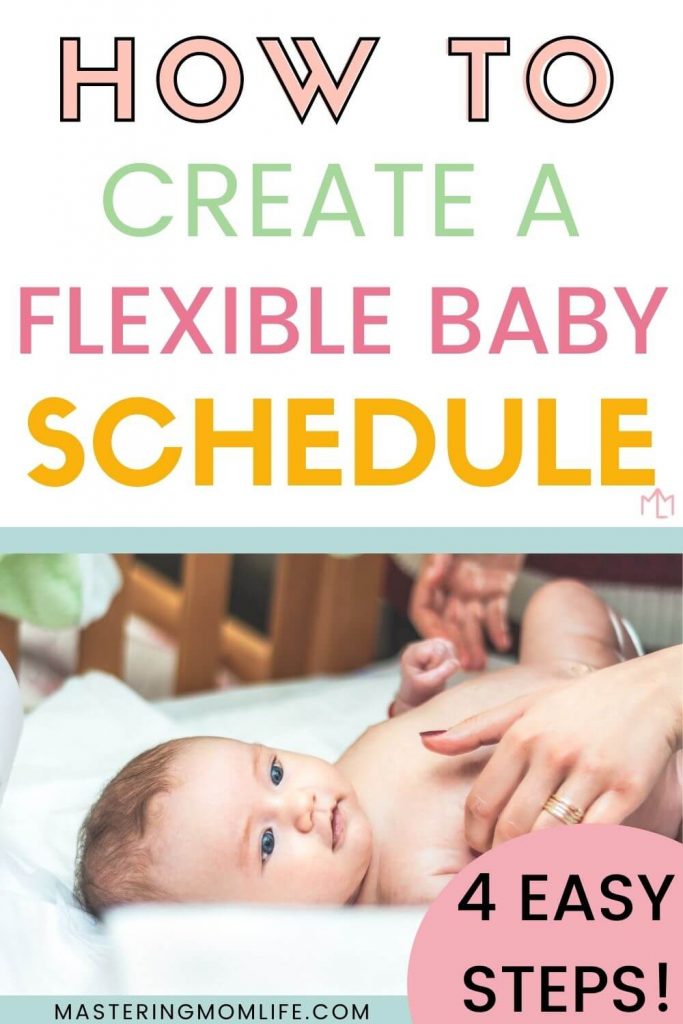
Inside: Learn the 4 simple steps you can take to create an easy baby schedule that is flexible and encourages developmental growth!

Let’s talk about the dreaded S word

— Schedules.

Specifically, baby schedules.

A baby schedule doesn’t have to be a harsh, rigid schedule dictated by the ticking hands of the clock.

It can be as simple and as flexible as you like while meeting your baby right where they are developmentally.

Here are the 4 key principles for every baby schedule foundation we’ll be diving into:

  1. Wake windows
  2. Full feedings
  3. Restful sleep
  4. Stimulating activities

By using these 4 key pillars you’ll be able to create your own easy, flexible baby schedule that fits YOUR family!

From sleep training to baby-led weaning to toddler discipline, there IS a way to confidently communicate with your child and have your child communicate with you in a way that is positive, encouraging, and simple.

It all begins with a baby schedule!

Not a restricting schedule- but a flexible, positive routine that helps your baby reach new milestones and thrive.

To create your own flexible baby schedule, you’ll want to make sure you follow these 4 key principles throughout the day.

Free Baby Tracker and Mom Planner

Get this FREE 15 page Mommy & Me Planner/Baby Tracker to help you create an easy baby schedule, stay organized AND save your sanity! (Plus receive weekly emails with more baby & mom life freebies!)

Why is a baby schedule important?

Having a schedule for your baby comforts them by giving them something they can expect daily- this in turn will benefit both you and your baby greatly!

When a baby is fed, bathed, plays, and sleeps around the same time every day it gives them a pattern. This pattern will then help you teach them fundamentals- such as eating, sitting up, self-soothing, etc.

When your baby knows what’s going to happen next it becomes a part of them and then begins to flow naturally as they grow.

In short, babies thrive on schedules.

You can read all about the 7 key benefits of having a baby schedule here!

How to create a flexible baby schedule

How to create a baby schedule?

If you’re having trouble knowing what your child’s existing schedule is, then follow these simple steps to help you!

1. Track your baby’s daily actions and mood for 3 days.

Set aside 3 days to track your baby’s actions. When does he eat? When does she start getting tired? How long does he sleep? How long does she play?

By tracking these actions for 3 days you’ll be able to see an overall routine that your baby is doing.

2. Use that pattern to create a schedule

Babies naturally fall into a routine (just like adults!). We eat, sleep, and live our daily life within the same structure from day to day.

By seeing their sleep, wake, and eat patterns, you can create a schedule that will help them limit their fussy times.

By using this method, you’re not forcing your child on a schedule that doesn’t work for them. You’re leaning into the turn of their natural body clock.

Use the FREE Baby Daily Tracker to help you complete these steps stress-free. Track your child’s naps, feedings, moods, and activities all in one place. Then you can easily start to see their routine so you can know without a doubt their golden wake window 😊

Get the FREE Tracker by clicking the button below!

You simply want to reiterate a “structure” to your baby’s day that will help your little one understand what is going to happen next- this brings your baby great comfort when they have a stable routine for their day.

Learning your baby’s cues

By creating a flexible schedule you’ll also begin to understand your baby’s cues better.

Have you ever asked yourself is my crying because something is bothering her or is it hunger?

When you have an overall routine for your day you’ll start to know your baby’s cues and this will help you understand your baby better.

Your baby’s cues are the way they communicate with you!

When you are able to understand the cues, you are communicating with your little one 🙂

How to make a baby schedule flexible and rigid-free

4 Keys to Create an Easy Baby Schedule

Baby schedules do not have to be rocket science. You simply follow your baby’s cues for the 3 main behaviors of the day- sleep, feedings, and activities. These 3 behaviors are going to be the premise of your baby’s whole day.

 Here are the 4 easiest steps you can take to create your own flexible routine:

1. Watch your baby’s wake windows

(This applies to any child that is still taking naps– from 3 weeks old to 3 years old).

Your baby has a certain amount of time they should be awake before going back to sleep. These times will change as your baby grows. You want to ensure your child is staying awake long enough to fill their “tired cup” but not reach a point where they are overtired.

Creating a schedule that is within the healthy boundaries of your baby’s wake windows will build the overall frame for your day.

What is a wake window?

A wake window or wake time is the amount of time your child is up from their last sleep to the time they go back to sleep.

This wake time is used to help you understand the maximum amount of time your child can be up without being overtired and fussy—and ultimate missing the time they were supposed to nap.

Wake Hours per Month

Here’s an example of Baby L’s wake time windows as she’s grown:

Birth-3 months: 1- 1.5 hours awake

4-6 months: 1.5-2 hours awake

7-9 months: 2-2.5 hours awake

10-14 months: 3-4 hours awake

15-24 months: 4.5-5 hours awake

24-36 months: so far, it’s remained at 5 hours of wake time

Feel free to use this as a guide for your baby’s wake times!

2. Accomplish Full Feedings

Ever asked yourself “is my baby done eating?” and then 30 minutes later you have a full-blown baby meltdown only to realize that your child was still hungry?

This has happened to me countless times!

In order for your baby to thrive, they need to complete full feedings.

This will not only help them grow but also help them accomplish better sleep and stimulated awake time.

It’s important to know that the goal of every feeding is to have a full feeding- this will allow your baby to stay fuller longer and create a feeding pattern for them that works.

When your child is hungry or has trouble with feedings, it can throw off the whole day because they’re not experiencing healthy feedings. When your child has a full feeding, they are content, satisfied and will last until their next feeding.

Full feedings are an important building block in your overall baby schedule.

(If you are struggling with feedings and are noticing that the rest of your day is also being affected, talk to your doctor.)

Full belly = Happy baby

If you want to learn how to accomplish full feedings, read this post to learn the signs of incomplete feedings, how to reach full feedings, and how to create a healthy full feeding schedule!

Baby Napping

3. Encourage Restful Sleep

The next step to create an easy baby schedule is to focus on restful sleep- usually made up of a couple of naps and a long nighttime stretch of sleep.

(Depending on how old your little one is will determine how many times they nap and for how long.)

For example, a 4-month-old will nap 3-4 times a day for 45 minutes- 2 hours and have a long nighttime stretch between 8-11 hours. But a 2-year-old will probably nap once for 2-3 hours and have a long nighttime stretch for 10-12 hours.

Both of these different scenarios meet the recommended amount of sleep a child needs within a day.

You’ll want to create a sleep environment conducive to a good sleep, including:
  • a swaddle or sleep sack (if applicable),
  • a dark room,
  • sound machine
  • keeping the room a cool temperature.

Learn all about the importance of a nap routine and how it can promote better, restful sleep for your baby by reading this article here!

Educational & fun toys are the best to fill wake time!

4. Fill wake time with activities

Now that your little one is eating well, sleeping, and is up for an appropriate amount of time, it’s time to fill that wake time with stimulating activities that encourage developmental growth!

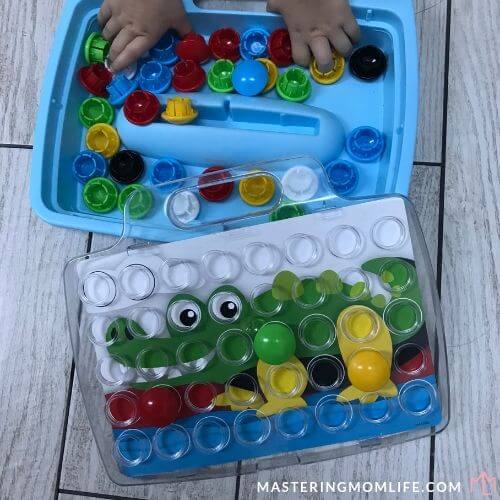
From tummy time to sensory bins, you can add fun activities that are age-appropriate for your little one to keep them busy, stimulated, and reaching new milestones.

You don’t have to go crazy creating hard-to-set up and expensive activities. Simple things like mirror play and finger puppets can go a long way.

If you’re struggling with how to keep your little ones entertained while they are awake, check out my Tiny One’s Boredom Buster Activity Toolkit.

This toolkit is filled with 30+ easy, affordable activities for all age ranges that will help you take the overwhelm OUT of planning fun, educational and affordable activities for your child while encouraging independent play and parent bonding!

The Tiny One’s Boredom Buster Activity Toolkit is a flexible step-by-step activity system where you can easily plan your own weekly activities by plugging them into YOUR daily routine based on the provided activity worksheets and templates!

Learn more about this sanity saving activity toolkit here!

Don’t forget to download the Mommy & Me Mini Planner!

Sometimes words are useless if you don’t have the tools you need to back them up!

To help you easily create your own flexible baby I created this FREE mommy & me mini planner/tracker to help you track your baby’s daily actions and create a thriving routine for your little one!

It includes different baby tracker sheets to track naps, feedings, and diapers as well as planning templates for YOU to help you get more done in less time while taking care of your little!

The Wrap Up

These 4 keys will help you create an easy baby schedule that is rockin’, flexible, effortless, and works best for your family.

Remember to always:
  1. Watch wake windows
  2. Try to accomplish full feedings
  3. Create a restful sleep environment
  4. Fill wake time with stimulating (& easy!) activities

Your baby schedule can be as simple and as flexible as you like while meeting your baby right where he/she is developmentally.

You got this, mama!

Always With Love, Brianna

Check out these other posts all about easy baby routines!

How to Easily Start a Baby Nap Schedule to Make Naps Better!

What My Baby Schedule Looks Like

Ultimate Step by Step Guide to Help Your Baby Nap

April 29, 2021 · Leave a Comment

The Best Newborn Baby Essentials You Actually Need

Baby Routines

Toddler holding baby doll- newborn baby essentials

Inside: Wondering what your baby will *actually* need? Find out the 10 best newborn baby essentials to make the first 3 months easy so you can stress less and just enjoy the cuddles!

I stepped out the car with my newborn baby in my arms and stood in front of my door.

“Can I actually care for this sweet, little baby all on my own??”

Nothing can quite prepare you for caring for a newborn but with the right essentials, you’ll feel like you got it all under control!

Without the proper newborn baby essentials, it can feel like climbing Mount Everest without any climbing gear- impossible.

I’ll share with you the best newborn baby essentials to help you feel confident that you’re caring for your baby in the best and easiest way possible.

…while staying on budget!

Being a parent is expensive. (Super understatement…) It’s important not to waste your precious money on items you don’t need so you can just focus on the essentials that are actually worth it.

Here is a list of newborn baby essentials you will actually need and use on a daily basis for the first 3 months to make your mom life easier.

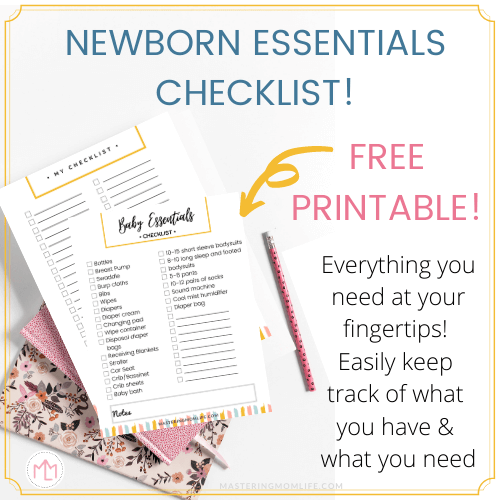
Newborn essentials checklist free printable

What are Newborn Baby Essentials?

Newborn essentials are all of the items that your newborn is going to need to use every day. These items are going to be the things you use day in and day out to care for your baby in the best way possible.

…And also make your mom life easier!

As an Amazon Associate I earn from qualifying purchases. Please view Mastering Mom Life’s Terms, Disclosure & Disclaimer Policy and Privacy Policy. I wholeheartedly believe in all of the products I recommend and use them all! 

Don’t have time to read this now? That’s ok, Save it to your favorite Pinterest Board for later!
How to Make the First 3 Months with Baby Easy | Newborn Essentials | teddy bear on floor

Where to Buy Newborn Essentials?

Finding newborn essentials these days is really easy. From your local Dollar Tree to Walmart or Target, you can find baby items almost anywhere.

But baby items can be really expensive. The little costs really add up and before you know it, the 10 items in your cart ring up to $200. Not fun.

The key to finding newborn baby essentials is to *know where to look*.

In this post, next to each newborn baby essential, I’ll link to where you can find that item for cheap.

An Amazon Prime account also really comes in handy for baby essentials. They have an Amazon Family Program where you subscribe monthly for the items and it gets automatically shipped directly to you every month for 5-10% off the regular price.

Those savings really add up!

And it saves you a trip to the store so you don’t have to take your little one out on those last-minute errands when you run out of an essential.

When to Buy Baby Essentials?

Before your baby arrives, you’ll want to add most of the newborn baby essentials to your baby registry. Even if it’s your second, third, or tenth child- I truly believe in baby registries because every mom should receive all of the extra help they can get!

For my first child, I created a registry at Target, Buy Buy Baby, and Amazon.

I was pregnant with my second child during the “stay at home order” in 2020 and since most people were quarantined and stores shut down, I only created an Join Amazon Family 30-Day Free Trial” target=”_blank” rel=”noreferrer noopener nofollow”>Amazon Family Program– it comes right to my door.

Talk about stress-free!

The best newborn essentials for the first 3 months

The Best Newborn Baby Essentials You Need for the First 3 Months

Those first months at home with your baby can seem really overwhelming. Between feedings, naps, a million burp cloths, different cries, and sleep deprivation- things can go from sane to chaotic reaallyyy fast.

But having these essentials on hand can help you care for your baby in the easiest way possible so you can stress less and just enjoy on the cuddles.

What Essentials Does a Newborn Need?

1. A Way to Feed

The most important newborn baby essential you are going to need is a way to feed your baby. Whether you are breastfeeding or formula feeding, you need to have all of the necessities for feeding your baby through whatever decision you choose.

In the past I have breastfed, pumped, bottle-fed, and formula-fed so I can speak from experience on most of the feeding options!

Here’s a quick list of essentials for each way of baby feeding—

Breastfeeding:

  • Support pillow
  • Burp cloths
  • Breastfeeding basket with a water bottle, charger, snacks, etc.

Pumping:

  • Breast pump
  • Pumping bra
  • Extra pump parts
  • Bottles
  • Breastmilk storage bags

Bottle Feeding:

  • Bottles
  • Nipples
  • Nipple rings
  • Storage caps

RELATED READING: How to Prevent & Reduce Baby Gas while Feeding

2. Diapers

The next newborn baby essential you’ll need for the first 3 months (and far, far beyond…) is diapers.

This is probably an obvious baby necessity but I learned the hard way that it’s important to have different size diapers on hand.

Don’t be afraid to try different kinds of diapers because each diaper is designed a bit differently.

For example, I love the absorption of Pampers Swaddlers but I love the tabs and elasticity of Huggies.

Put a couple of different diapers on your registry to try! Add size newborn to size 3 just so you can ensure you’ll have enough diapers to get you through the first few months.

Here are some other diaper changing essentials you’ll need:

  • Changing pad
  • Wipes & baby wipe container
  • Diaper disposal bags

3. Baby Clothes

The next newborn essential you’ll need is clothes for your baby.

You don’t need a huge wardrobe for your new little one. Although baby clothes are sooo irresistible and cute 😊

Especially if you’re on a budget, you only need these baby clothes essentials:

  • 10-15 short sleeve body suits
  • 8-10 long sleep and footed body suits
  • 5-8 pants
  • 10-12 pairs of socks
  • 15-20 burp cloths and bibs

The quantity of each clothing item varies because you’ll have a couple of spit up accidents per day (and let’s not forget poop explosions!) so you’ll need more of the same item on hand.

If you have a washer/dryer, you can even have less clothing items and commit to doing a load every day.

4. Diaper cream

I know a lot of parents who don’t use diaper cream on a daily basis but in my personal experience, it’s been a lifesaver.

I’ve used the same diaper cream on each of my babies every day and they NEVER had diaper rash, irritation, or rashes!

I totally attest this to the Baby CeraVe Ointment.

You can even put this ointment on your baby’s body if they have a little scratch or a minor rash (always consult with your pediatrician).

5. Swaddle

The next newborn baby essential for the first 3 months is a swaddle. My first daughter loved her swaddle. My second had to get a bit adjusted to it before we can use it consistently but once she got used to it, it was like magic.

I truly believe the swaddle can be the different between a bad night and a good night sleep. Of course, your baby won’t be sleeping through the night for the first few months, but laying a solid sleep foundation is crucial in those first 3 months of their little life.

Using a swaddle can really help set that sleep foundation.

My daughters would wake themselves up from a deep sleep when they flail their arms and the swaddle completely solved this little issue. By week 8, each of my little ones was sleeping 7-8 hours a night!

You can read my step by step easy and flexible newborn routine that I used here

Here are a couple of different swaddles I have used:

  • Halo swaddle
  • Swaddle Me
  • Swaddle Blankets
The Bare Necessities a newborn needs

6. Bassinet/Crib

Your little one is also going to need a place to sleep, either in a full size crib or a bassinet. The location is totally up to you!

With my first, we set her in her own room in a crib the first night we came home from the hospital.

With my second, we didn’t have an extra bedroom so we purchased a bassinet and placed her in our room behind a partition for the first few months.

As long as your little one is in a safe, sleep approved bed designed for babies, you’re good. If you are co-sleeping, the make bassinets that attach to your bed which is great for those late-night breastfeeding sessions.

I personally always placed my babies in their own sleep bed/space but talk to your pediatrician about what’s best for your family.

Some of my other favorite baby sleep essentials that helped set a solid sleep foundation are:

  • Sound machine
  • Swaddle
  • Cool temperature
  • Blackout curtains

7. A way to bathe

You won’t be bathing your baby in a submerged bath until their little umbilical cord falls off, but after those 10-15 days, you are usually free to give your little one a bath.

Which is one of my favorite things to do!

You’ll need a safe way to bathe your baby. There are a ton of options, from small and space-saving all the way to luxury baby baths.

If you don’t have a bath tub, you can even use special foldable sink tubs.

The most important thing is to have a save way to bathe your baby!

8. Car seat

The final newborn baby essential you’ll need for the first 3 months is an infant car seat. Most hospitals won’t even let you discharge your baby from the hospital unless you show them your car seat.

There are a TON of different car seat options but you want to make sure the car seat is approved for infants, especially the first few months.

A lot of car seats come in a convertible format, so they can be for infants, babies, and then even toddlers.


Related Reading:
5 tips to help your baby love the car seat

Tips for Newborn Baby Essentials on a Budget

Here are some simple ways to save money on newborn baby essentials:

Use a bag you already have as a diaper bag

Diaper bags are so cool. Some even have built-in changing pads. But you don’t really *need* a diaper bag. And some diaper bags can be really expensive.

All you need is an open tote bag with pockets or a book bag with pockets and a baby changing kit.

Then all you have to do is throw the baby changing kit in your bag along with an extra change of clothes, burp cloths, and a pacifier- then you’re good to go!

Try store brand diapers

Diapers can be really expensive as well. Visit your favorite local stores and try their store brand diapers. Most diapers are made of the same materials and even the same manufacturers, they just have different names!

Keep an eye on any rashes or skin sensitivities you begin to notice on your baby. If you notice anything that would be irritating your baby’s bum, change diapers.

Don’t buy a special diaper disposal can

If you want to save money, don’t spend any money on expensive diaper trash cans. Especially the ones that cost extra for special diaper trash bags.

Yes, baby diapers are smelly and you don’t want that odor lingering in your home all day long. Here’s what you can do:

  • Purchase a small diaper pail ( I got mine for $1 at Dollar Tree)
  • Use these diaper disposal bags
  • Place the dirty diaper in the bag, tie it up & throw in the diaper pail.
  • After your next diaper change, open the bag and add the dirty diaper to it
  • Add up to 4 diapers to that same disposal bag
  • Empty the diaper pail every night and you’re all set!

So a disposal bag that cost you 10 cents just kept your home smelling fresh and poopy free all day 😊

Invest in convertible items

If you’re looking to save money long term, look into buying baby essentials that can grow with your baby. Most baby items are “convertible” and all you need is a couple of extra parts to make them suitable for different stages of your baby’s life.

So instead of buying an infant car seat, a regular car seat, and a toddler booster seat, purchase a convertible car seat that has all 3. It’ll save you three times the money as well!

The same goes for convertible cribs and strollers too.

Download a FREE Newborn Essentials Checklist

Baby shopping can really make your head spin! Download this Free Newborn Essentials Checklist as an easy way to keep track of everything you need and everything you already have so you don’t forget anything in this article.

The checklist also includes an empty checklist template where you can create your own list!

Download the free newborn baby essentials checklist now

​

Take the overwhelm out of prepping for your newborn’s arrival! Get the FREE Newborn Essentials Checklist when you join my Mom Life Insider Tribe (+receive weekly freebies and mom life tips!)

    We won’t send you spam. Unsubscribe at any time.

    Well there you have it!

    I hope this list of newborn baby essentials will help you make the first 3 months at home with your baby as easy as possible….and sanity-saving 😊

    With these newborn baby essentials, you’ll feel confident that you’re caring for your baby in the best and easiest way possible!

    You got this, mama! ❤️

    Always With Love, Brianna

    Read these other posts to help you care for your newborn easily!

    Easy Newborn Routine to Accomplish Full Feedings & Healthy Sleep

    9 Best Tips to Make Motherhood Easy with a Newborn

    Bottle Feeding Tips to Reduce and Prevent Gas

    February 14, 2021 · Leave a Comment

    How to Easily Prevent Baby Gas (Best Bottle Feeding Tips)

    Baby Routines

    Best Bottle Feeding Tips to Help Prevent Gas

    Inside: Find out 7 easy and effective bottle feeding tips to prevent and gas so you can have a happy baby!

    It was 2 o’clock in the morning and my sweet little 5 week old baby girl was crying for an hour straight. Not normal “baby crying”. I’m talking back-arching, red-faced, legs scrunched, screaming-crying.

    And I was crying with her.

    I was at a loss for words and had no idea what to do.

    Was it colic? Did her stomach hurt? Is this a sign that something is seriously wrong and I just don’t know it??

    Then, as if heaven opened up, she let out an earth-shaking burp and toot -what we call passing gas in our house 🙂

    Low and behold, she had a really, really, bad case of trapped gas!

    From that night forward, I vowed to do everything I can to prevent it from happening again.

    If your baby is experiencing gas pains, I’m going to share all of my best tips and tricks to help you prevent and eliminate any gas troubles!

    I used these same exact tips with my first baby to help reduce gas and with my second baby to help prevent gas troubles from ever arising.

    And it’s worked!

    Here are 7 easy baby bottle feeding tips to reduce gas and prevent discomfort in your baby’s tummy.

    No time to read this now? That’s ok! Save it your favorite Pinterest board for later!
    How to easily prevent baby gas: bottle feeding tips

    Please know that I am not a doctor or physician and I am not medically trained. All tips and advice given is based on my own experience and given to me by my own pediatrician. If you have any questions or concerns, please contact your doctor. This post is solely to offer encouragement from my experience and not designed to offer medical advice or treatment. Please view Mastering Mom Life’s Terms, Disclosure & Disclaimer Policy and Privacy Policy.
    What are the signs my baby has gas?

    When your baby is experiencing gas, it can look like:

    • Excessive crying
    • Red face
    • Arched back while crying
    • Scrunched legs

    In my personal experience, my daughter’s colic had a lot to do with her gas issues (and feeding issues that I’ll show you how to prevent).

    How to identify baby gas issues?

    Sometimes gas pains can mirror signs of colic. That’s why it’s so important to track your baby’s feedings, poops, and overall behavior every day.

    To identify the difference between normal gas and gas issues, you’ll want to write down when your baby eats, how much, and their mood afterwards.

    If you are breastfeeding, also keep a food diary of what you are eating and when because your diet directly affects what your baby is eating.

    If you start to see a pattern of:

    • fussiness after eating,
    • baby stops fussing after burping or passing gas,
    • is irritable for more than an hour everyday,
    • showing discomfort when cries (red face, pulling up legs, arching back)
    • not sleeping or eating well

    These are just some common signs that your baby is experiencing gas troubles. If you notice a consistent pattern of these signs, it’s time to visit the pediatrician and possibly discuss other feeding options such as a mom diet change for breastfed babies or a formula change.

    Download the FREE Mommy & Me Planner + Tracker!

    Use this free planner to help you track your baby’s feedings, moods, diaper changes, naps & more!

    It also helps you plan your to-do list and everyday mom life tasks in the same place so you don’t have to use 3 different planners and lists to get the job done!

    Mommy & me planner: Image of desk and flowers

    Why do babies get gas?

    Babies are naturally gassy! A baby’s digestive system is still developing and is maturing as they grow.

    Just like adults, when we eat and our belly grumbles, a baby’s stomach does the same thing but they are too little to vocalize it and their systems are immature.

    That’s why we burp babies, because they can’t burp themselves yet.

    Babies also tend to swallow air when eating and this creates little bubbles of gas in their tummies.

    7 Easy Baby Bottle Feeding Tips to Prevent Gas

    Here is the list of exact step by step tips I used to help prevent and reduce gas in my babies.

    I started using these tips when my first born was 4 weeks and used them immediately after birth when my second was born.

    1. Angle Your Baby When Feeding

    The first bottle feeding tip to reduce gas in babies to position your baby at least 45 degrees on your lap when feeding.

    Don’t lay your baby down to eat.

    A good tip to keep an eye out for is to make sure their head should be elevated higher than their stomach.

    Your baby doesn’t have to be sitting straight up, 90 degrees, but you just want to keep their head and elevated so they can digest properly.

    Mastering Mom life is a participant in the Amazon Services LLC Associates Program. As an Amazon Associate I earn from qualifying purchases.

    Easy Bottle Feeding Tips to prevent and reduce baby gas

    2. Fill Bottle Nipple

    One of the main culprits that causes gas is when your baby swallows air.

    To prevent this from happening, fill the bottle nipple completely with milk so your baby is only swallowing the milk and not extra air.

    The key to this tip is to use the slowest nipple your baby can tolerate without getting frustrated (and taking 10 years to eat haha).

    You want to use a slow flow nipple so your baby isn’t just swallowing large amounts of milk, which can another cause of gas and can leave lead to increase spit ups.

    If you are using the pace bottle feeding method, be sure to use an anti-colic bottle (see tip below!) and a slow flow nipple.

    3. Use Anti-Gas Bottles to Prevent Gas

     This bottle feeding tip to prevent gas is kind of obvious, but can really be a difference between a fussy baby and a calm, comfortable baby.

    When I was a new mom making my baby registry, I had no idea why there were 100 different bottles.

    After my baby was born and we started to experience baby gas troubles, I totally understood.

    Different bottles have different functions.

    There are:

    • Standard, regular, “I can buy these at the dollar store” bottles.
    • Breastfeeding bottles that mimic a breast
    • Anti-colic bottles
    • Anti-gas bottles
    • Wide nipple bottles
    • Narrow nipple bottles
    • & so on!

    The bottles you want to focus on are anti-colic/anti-gas bottles. They have a ton of different options out there too that will best fit your baby’s needs.

    To cut to the chase, these bottles are designed to eliminate extra air so your baby isn’t swallowing large amount of air when they suck.

    Most of anti-gas bottles have a vent of some sort to dispel that air from the bottle.

    I’ve personally used the Tommy Tippee anti-colic Closer to Nature bottles and Dr. Browns bottles.

    Each of these bottles come in a wide nipple or standard nipple depending if your little one is breastfeeding or not (the wide nipple mirrors the natural breast-like feeling)

    In my experience, the Dr. Browns bottles work better for my babies because I’ve noticed they have considerably less gas when we used them and they are easier to hold.

    The downside to these bottles is the extra parts. More parts mean more dishes/cleaning but in my opinion, it’s worth it if my baby is going to be less gassy and happier 🙂

    Want to make sure your baby has a full feeding so they sleep better? Check out this post to help you reach full feedings!

    4. Burp after every ounce to Prevent Gas

    A baby’s system isn’t mature enough yet to “burp by itself”. You know when you drink soda really fast and you feel a bubbly sensation and then burp? No one had to pat your back to burp you. Your body did it on it’s own.

    A baby’s digestive system can’t perform that function yet.

    So instead of just releasing the gas through a burp like an adult, your baby just feels that uncomfortable, bubbly sensation….and therefore cries.

    To prevent the gas from building up in your little one’s belly, you want to frequently burp your baby during her feedings.

    Not every 2 minutes where he gets frustrated and is screaming from hunger. But after every ounce or 2, simply burp your baby.

    How to burp your baby:
    • place your baby in a burping position
    • cup your hand slightly
    • gently pat their back for a couple of seconds (30-60 seconds)

    Doing this after every ounce or so can help prevent and reduce your baby’s gas.

    Common burping positions:
    • Place baby upright with their belly flat against your shoulder and pat their back
    • Sit baby straight up on your lap and gently lean them a bit forward while holding their chest and pat their back
    • Lay baby flat on their belly on your forearm while your hand is gripping/securing their chest and pat baby’s back (football hold)

    Remember to always have a burp cloth ready for the occasional spit up!

    5. Bicycle Legs

    This baby gas tip is for after feedings or can be done with your baby is actuall crying with gas.

    Simply lay baby on their back on a secure, flat surface. Start to move their legs up toward their chest and then back down again. Mimicing a bicycle!

    This helps release gas and comforts them when they are experiencing gas.

    6. Keep baby elevated every 10 minutes for 1-2 minutes

    Another great tip to prevent and reduce baby gas is to keep your baby elevated for a couple of minutes after every 10 minutes during a feeding.

    This also is a good hack for babies who struggle with reflux!

    I incorporate this tip during every feeding by combining it with my daughter’s burp time.

    Every other time I burp her, I will keep her upright and elevated for a couple of minutes after she burps just to really secure her from getting any gas.

    7. Optional: Use a Probiotic

    15 minutes after I delivered my daughter, she was sent to the NICU and received 2 doses of antibiotics every 12 hours for 3 days. At the time, I had no idea the possible effect antibiotics can have on a 1 hour old baby!

    After my daughter started showing signs of colic (and extreme gas), my husband and I went on the hunt to do anything we can to help her. I changed my breastfeeding diet, started to supplement, switched formula 4 times, and eventually arrived at our solution…

    My daughter needed probiotics.

    Her system was so immature to handle the antibiotics and it affected her digestive system.

    We stumbled upon the Gerber Soothe formula that had a special probiotic already mixed in. within 2 weeks, my daughter was a different baby. She slept better, ate better, and was overall so much happier!

    Gerber also makes the probiotic in drop form that you can add to any milk or drop into your baby’s mouth.

    If your baby is struggling with gas or colic, talk to your pediatrician about the possibility of a probiotic. It might be your saving grace like it was for us!

    Download the FREE Mommy & Me Mini Planner + Tracker!

    Well there you have it! I hope these 7 easy bottle feeding tips to prevent gas helps your little one feel better, happier, and more comfortable.

    And I hope it give you the confidence to know that you are doing a great job!

    Always With Love, Brianna
    Read these awesome articles to help you with baby feedings!
    • How and When to Feed Your Baby to Easily Accomplish Full Feedings

    February 2, 2021 · Leave a Comment

    • « Go to Previous Page
    • Go to page 1
    • Interim pages omitted …
    • Go to page 3
    • Go to page 4
    • Go to page 5
    • Go to page 6
    • Go to page 7
    • Interim pages omitted …
    • Go to page 29
    • Go to Next Page »
    • Privacy Policy
    • Cookie Policy
    • Terms, Disclosure & Disclaimer Policy
    • About Me
    • Contact
    • As an Amazon Associate, I earn from qualifying purchases.

    Copyright © 2026 · Glamour Theme by Restored 316