• Skip to primary navigation
  • Skip to main content
  • Motherhood
    • Mom Life Hacks
    • Pregnancy Life
  • Routines
    • Baby Routines
    • Toddler Routines
  • Family Travel
    • Disney Planning
    • Free Family Vacation Planning
  • Contact
    • About

Mastering Mom Life

Routines for littles made easy!

Family Travel (old)

Ultimate Guide on How to Follow Baby Wake Window & Cues

Baby Routines

Ultimate Guide to Baby Wake Windows and Cues

Inside: Read the ultimate guide on how to follow baby wake windows and the secret to optimizing sleep using tired cues to build a strong sleep foundation for longer, better naps

Have you ever heard – “Make sure to follow your baby’s wake windows”?

Sometimes baby sleep advice can be very overwhelming. After all, every baby is different!

 As a new mom, I was bombarded with baby sleep guidance— “don’t bed share”, “don’t let the baby fall asleep eating”, “wake your baby after 3 hours of sleep”, “lay down drowsy not sleeping”…

I felt like I was in an avalanche of information. And the worst part was, I didn’t know what advice was wrong and what was actually useful.

But after walking through my own journey of motherhood, I found my own groove. I found my rhythm of parenting where I was able to decipher what advice actually mattered and what didn’t.

One baby sleep tip that held true was being aware of wake windows. But I found a twist that’s even better!

The key is to partner your baby’s wake window with their tired cues for better, longer sleep.

This means you get a full nap time to catch your breath, mama 🙂

 Not too sure how to do this? That’s okay! I’ll walk you through the step-by-step guide to baby wake windows to help you maximize those wake times and promote better sleep.

Let’s jump in…

How to Follow Baby Wake Windows Using Cues

What is a wake window?

So, what exactly is a wake window and why is it so important?

A wake window is simply the amount of time your baby can be up before needing another nap. Or the stretch of time your baby is a wake in between naps. A wake window normally starts from the time your baby wakes to the time they go back to sleep.

Knowing the amount of time your baby can stay awake in between naps at every stage of their growth is the little golden secret to better naps!

Understanding your baby’s wake window can help you offer your baby a nap before they get overtired. It can also prevent your baby from being undertired, which often leads to short naps.

As your baby grows, their sleep needs change. When your baby is a newborn, they sleep all the time with very little wake time. But as they grow, their naps consolidate and the amount of sleep they need during the day decreases.

That’s why a 1 month old can have 5 naps and a one year old can have 2 naps.

As your baby grows, their naps decrease and their wake windows increase.

But how do you know your baby’s wake window?

Wake windows are usually based on your baby’s age. The recommended wake windows are helpful to know the approximate time your baby can be awake before needing another nap. This can help prevent crankiness, fussiness, short naps, fragmented naps, and overall poor sleep.

Number one secret to baby wake windows and better naps

Here are the recommended wake windows and naps by age:

1-4 Months Old

  • Number of Naps: 4
  • Wake Window: 30-60min

5-8 Months Old

  • Number of Naps: 3
  • Wake Window: 2-3 hours

9-12 Month Old

  • Number of Naps: 2
  • Wake Window: 2.5-3.5

12-18 Months Old

  • Number of Naps: 2 or 1 (17m+)
  • Wake Window: 3-4 hours

And while it’s useful to the “recommended wake window” times are helpful, it doesn’t have to be strictly followed.

The most important factor is—knowing your baby’s tired cues.

Instead of just following the recommended wake window- use it as a guide for your baby’s age.

Partnering your baby’s tired cues with the recommended wake window is the optimal way to ensure you are offering your baby naps based on their exact signals and stage of development.

How to know your baby’s wake window

To know YOUR baby’s wake window, simply start to watch your baby’s tired cues about 30 minutes before the minimum time of the wake window. That way, you are aware of your baby is tired before the wake window and you don’t miss their “nap window” (the time you give your baby the nap before they become overtired)

For example, if your baby is 7 months old and is supposed to have a 2.5 hour wake window then around 2 hours from their last nap you would watch for any tired cues. If your baby getting a little slower, maybe staring off into space or starting to slow blink, then you would begin your nap routine and put your baby down to sleep.

That means, at a typical 2.5 hour wake window age, your baby’s wake window is really only 2 hours.

And that’s okay!

But if you were only following the recommended guide, then you would have kept your baby up for a half hour longer which means a fussier baby, a frazzled mom and possibly a poor nap.


Related Reading: 0-12 Months Sample Baby Schedule Routines


Understanding Your Baby’s Tired Cues

The secret to how to follow baby wake windows is to follow your baby’s tired cues- not just their wake windows.

If you just follow a wake window, you can put your baby down for a nap either too early or too late which will lead to poor, unrested, short naps and a very fussy, irritable baby– not good!

Even though your baby cannot fully talk to you yet, they are always communicating with you. Whether by sounds and coos, or screams and flailing arms.

Your baby communicates with you through their body and sounds. And it’s essential to know how to read those communication cues.

What is your baby trying to tell you with their cues? How do you read those cues?

By focusing and paying attention to your baby’s

  • cries, coos & sounds
  • facial expressions,
  • hand movements,
  • mouth movements,
  • eye patterns,
  • overall body movement

All of these things can help you know more about your baby and what they need.

Here are some examples of communication cues that your baby might do when she/he is tired- I call them tired cues.

Tired Cues:
  • Staring
  • Slow blinking
  • Red eyebrows
  • Relaxed hands
  • Reaching for sleep associations (blanket, pacifier, lovey, crib,)
  • Resting head on your shoulder

Some OVERtired cues include irritability, crying, fussiness, and hyperactivity. These signs could be that your baby is overstimulated and overtired, and their body is trying to process being awake when they should be sleeping.

If you offer your baby a nap when they are showing initial tired cues, you prevent can prevent your baby from becoming overtired!

5 Steps to Better baby sleep chart: Baby tired cues, wake window, full feedings, nap routine, peaceful sleep

Creating a wake window and nap schedule customized to YOUR baby

When you pair your baby’s individual tired cues with the wake window age recommendations, you are able to figure out your baby’s sleep needs and tailor a daily nap schedule based on your baby’s needs.

As your baby gets older, you will continue to watch for their tired cues and shift the wake window to accommodate their growth and development.

For example, if your baby is 9 months old and is starting to show signs of dropping their third nap, then you would begin to slowly elongate the wake window and watch for tired cues at a later time. Instead of 2.5-hour wake windows, maybe it’s time for 3-hour wake windows.

Because you are already in tune with your baby’s cues, it will be easier to spot when a developmental change is coming or happening.

Every change in your baby’s routine will be in a gradual pattern. If they’re dropping a nap, you’ll slowly add time to wake windows to fill the time they are awake that they normally would be sleeping.

How to Follow Baby Wake Windows FAQ

The best guide to understand wake windows

Does the wake window include feeding?

Yes, the wake window includes your baby’s full feeding as well as any activities they normally do while they are awake. Anything your baby does in between the time they wake and go back to sleep fills the wake window.

How long should baby’s first wake window be?

In my experience, this wake window is usually the shortest. It’s almost as if your baby’s first nap is an extension of their nighttime sleep and they can’t stay awake very long during that first window of being awake.

The first wake window can be quite of a mystery. Every baby is different.

You might notice that your baby’s wake window is 30-45 minutes shorter than the recommended wake window for their age. This is normal!

That’s why is essential to know your baby’s tired cues and follow their signals letting you know when they are tired.

For a 2-3 hour wake window, my daughter’s first wake window was only about an hour and 10 minutes. As she got older, this wake window got a bit longer but it was always substantially shorter than the other wake windows.

On the flip side, the last wake window tends to be a bit longer as your baby prepares for nighttime sleep.

Help! My baby doesn’t follow the wake window time

It’s perfectly normal for your baby to fall outside of the normal recommended wake window chart based on their age. Some babies have high sleep needs and need more sleep support and some babies have low sleep needs.

There is NO right or wrong when it comes to your baby sleeping. (As long as they are sleeping safely).

The most important thing you can do is follow your baby’s individual tired cues. When you know the signs of being overtired and under-tired, you can always gauge when your little one needs sleep. Whether it matches the “wake window chart” or not.

Every baby is unique and every baby’s sleep needs are unique. That’s why there’s no “one size fits all” when it comes to sleep.

If your baby doesn’t fall follow typical wake window times and if they are showing signs of poor sleep, reevaluate your daily routine- ensuring they are having full feedings, are reaching milestones, and filling the time they are awake with stimulating activities that promotes growth. Be sure to do a nap routine every time you offer your baby a nap to signal to your baby that it’s time to sleep.

Their tired cues told you that they need sleep and the nap routine tells them that sleep is coming. These signals work together to promote better sleep!

If your baby is having thriving days and the shorter/longer wake windows aren’t affecting their sleep, then you have a happy baby!

What age do you start following wake windows?

Remember, wake window recommendations do not have to be strictly followed. The key is to watch for your baby’s tired cues within the wake window range depending on your baby’s age.

It’s more important to understand your baby’s tired cues so you can accurately understand their specific wake window time.

Because you aren’t following an “exact” window of time, you can begin watching for tired cues and being aware of wake windows even when your baby is a newborn.

Your newborn can begin following a very loose routine as early as 4 weeks and if you are being mindful of their wake windows even at this early age, you can build a sleep foundation based on your baby’s cues. Allowing you to further understand your little one and deepen your connection.

Wake windows do become more prevalent as your baby grows out of the newborn phase and begins forming an overall daily nap schedule.

An encouraging note about baby sleep-

You cannot make your baby fall asleep. That’s right!

Truth is, you have no control over your baby sleeping or not. What you do have control over is offering them a nap. Meaning, making sure they are full, diaper changed, and in an environment conducive to sleep (dark curtains, sound machine, swaddle, etc.). It is up to your baby to take the nap!

Sleeping is a biological function that your baby is learning as they are trying to get used to this big, new world, just like learning to roll over crawl, and walk. They are adjusting to life outside of the womb and every week they are developing new skills.

Sleep is one of those functions! As your baby continues to develop, they will undergo several sleep levels. Enter things like the dreaded 4-month sleep regression haha. These are just signs that your baby is growing and developing new skills.

Some babies walk before the “average age”, some babies walk right at the “average age”, and others walk after. That’s why it’s called average- it can be before, during, or after and still be perfectly normal.

You can encourage your baby, support your baby, and set your baby up for sleep success but it is ultimately your baby who will learn how to sleep.

If you have a concern about your baby’s sleep patterns, always talk to your pediatrician first and you can consult a sleep consultant that fits your family’s needs.

Grab your FREE Baby Wake Windows Cheatsheet

All of this information can seem very overwhelming and can be a lot to process all at once. To help you save this awesome information and implement it on your own time, I created a Baby Wake Windows & Cues Cheatsheet for you!

It’s the perfect resource that you can refer back to and help you implement these baby sleep tips at your own pace.

The Baby Wake Windows & Cues Cheatsheet includes:

  • All of the highlights of this post including tips about tired cues and wake windows
  • Wake window chart & recommended naps by age
  • Routine Template
  • Daily Baby Tracker

Download the free PDF now and save it right to your device! Use the form below to get it sent straight to your best email address 🙂

RECAP– How to Follow Baby Wake Windows and Tired Cues

Some babies can only stay awake for a shorter amount of time before becoming overtired and cranky. And some babies have lower sleep needs and can be awake longer.

That’s why it’s essential to know YOUR baby’s tried cues and signals– so you can offer them a nap when they are communicating to you that they need it most.

Partnering your baby’s wake window with their tired cues will help you better understand your baby’s sleep needs, offer a nap at the optimum time and encourage better, longer, restful sleep for your baby

If you’re struggling with short naps or bad naps, try revisiting the wake window and honing in on those tired cues.

Always With Love, Brianna

Related Posts:

How to make a baby routine in 4 steps

0-4 weeks old newborn routine

1-4 Month Baby Schedule Routine

Easy 5-8 Month Baby Routine

9-12 Month Baby Routine

4 Baby Routine Essentials for a Perfect Foundation

Importance of a Baby Bedtime Routine

The Best Baby Bath Routine

How to Get Your Baby to Sleep In a Crib

July 28, 2022 · Leave a Comment

How to make a baby routine in 4 easy steps

Baby Routines

Are you overwhelmed with juggling your daily #momlife to-do list AND your baby’s activities? Grab my FREE Mommy & Me Mini Planner and take control of your day!

Inside: Find out how to make a baby routine in 4 easy steps to strengthen connection and care for your baby in the best and easiest way possible.

Every single morning I zombie walk to the bathroom after waking up and slowly transform into a functioning human after brushing my teeth, washing my face, getting dressed, etc…

…and then after my first cup of hot, steamy coffee, I’m like a racehorse out of its gates—ready for the day!

These little steps are a part of my routine. And no matter what you’re morning consist of, you automatically follow a routine that flows throughout your day.

The same is with little ones.

They thrive on a routine because it gives them the structure they need to know what is next. And routines also help you know what your baby needs next, giving you confidence that you can offer what they need and when.

A routine is simply a set of predictable patterns that will help your baby grow and develop.

Here’s a super simple breakdown of how to make a baby routine in 4 easy steps:

  1. Understand your baby’s cues
  2. Create sleep and feeding routines for full feedings and distinguish day and night
  3. Use wake windows
  4. Be as consistent as possible

Let’s dive into each step!

How to Make a Baby Routine

1. Learn Your Baby’s Cues

Even though your baby can’t talk yet, they are constantly communicating with you. From cries and coos to wails and even silence, these are little ways that your baby is talking to you!

The most important step in creating a baby routine is knowing YOUR baby’s cues. By knowing these cues, you are able to know what they need and how you can offer it to them.

A flexible baby routine is simply following your baby’s cues. You’re creating a routine made just for your baby to meet them where they are developmentally.

By knowing your baby’s cues, you are able to know what they need and even predict what they will need next, ultimately caring for them in the easiest way possible Minus all of the tears and meltdowns!

Chart: 4 steps to an easy baby routine. 1. understand baby's cues, 2. create sleep and feeding routines, 3. mind wake windows, 4. be consistent

2. Create sleep routines and feeding routines

Just like your baby tells you cues, you can signal cues to your little one to help them know what is next. Routines can help signal these cues to your little one in an easy and efficient way.

The most important routines to begin with your baby are sleep routines and feeding routines.

What are baby sleep routines?

Baby sleep routines are routines that help signal cues to your baby, preparing them for sleep. This helps your baby know that it is time for sleep.

There are 2 baby sleep routines: Nap routine and bedtime routine.

Nap routines help signal and prepare your baby for daytime sleep. As your baby grows, naps will decrease and wake time will increase. But when it’s time for nap, creating an environment conducive to sleep will help them wind down easier.

Nap routine can consist of closing black out curtains, turning on sound machine, cuddling for a few minutes, placing in swaddle/sleep sack, turning off lights.

Bedtime routines help your baby prepare for nighttime sleep- a long stretch of sleep. Bedtime routines consist of possibly bath time, lotion, bedtime feeding, book and song. Your bedtime routine is just a longer version of a nap routine, as you want to signal to your baby that bedtime is for nights.

 (These routines can also help your baby understand the difference between day and night.)

You can read all about nap routines here and bedtime routines here!

What are feeding routines?

A baby feeding routine is simply a series of steps or patterns before a feeding paired with feeding your baby every 2-3 hours. Maybe it’s putting baby in a boppy and setting up to breastfeed. Or maybe it’s shaking a formula bottle and putting on baby’s bib. These little patterns send a signal to your baby that it’s feeding time.

Have you ever taken out a bottle and your baby starts to root or lick their lips? It’s because you sent them a signal that it’s time to eat.

Most importantly, it’s essential to feed your baby every 2.5-3 hours- especially when they are showing hunger cues. Even if it’s not exactly “feeding time”, if your baby is starting to show you hunger cues, then it’s time to eat.

It’s also crucial for your baby to have a complete or full feeding every time they eat. This will prevent “snacking” throughout the day and help your baby stay fuller longer.

You can read all about Knowing Your Baby’s Full Feeding Schedule.

how to make a baby routine in 4 easy steps

3. Follow Wake Windows

Wake windows are super simple…

Wake windows are the amount of time your baby is up- when they wake up from a nap to when they go back to sleep for the next nap.

That frame of time in between naps– when they are awake– is called a wake window.

There are certain lengths of time that your baby’s wake window should be based on your baby’s age.

For example, a newborn is usually up 20-30 minutes in between naps. While a 1 year old wake window can last 2-3 hours.

As wake windows shorten, naps will decrease. The longer the wake window, the less naps your baby will have.

Following these wake windows are important because it offers your baby the developmentally appropriate time they can comfortably be awake without getting over tired or under tired. An under tired baby will not sleep good because they aren’t tired.

An overtired baby will not sleep well because they are overstimulated. But if you follow your baby’s tired cues, you will see your baby’s appropriate wake window and offer your baby a nap when they need it most. Thus, finding a routine that works just for your little one!

Important tip- Wake window charts are suggestions. They don’t have to be followed minute for minute. It’s more important to follow your baby’s tired cues to understand when your baby is tired, what time you should offer a nap – in doing this, you are figuring out how long your baby can be awake before the next nap.

4. Be Consistent

Can I be cliché for a moment? Consistency is the most important step in life. From working out to eating well to making goals—being consistent is the gamechanger.

Caring for your little one is no different!

If you want to truly meet your baby where he/she is and care for them in the best way possible, it’s imperative to be consistent. Consistency will help them feel secure in their daily routine, knowing their needs are being met and the predictability can help you parent with even more confidence!

Starting a new nap routine? Stay consistent.

Need to revamp wake windows? Stay consistent.

Trying to accomplish full feedings? Stay consistent

Whenever you feel that something isn’t working, it’s okay to pivot and change the routine to help your baby thrive. In the midst of changing the routine, when you find something that works, remain as consistent as possible and you will see a true difference!

Mommy & Me All In One Planner | Mommy Planner| Free Planner

Free Mommy & Me Planner

Download a free Mommy & Me Planner filled with a daily routine template and baby tracker so you can create your own routine in the easiest way possible!

Plan and track YOUR day and your baby’s routine in ONE place so you can get more done in less time.

Get the free instant download now!

Successful Baby Routine Recap

There you have it, how to make a baby routine in 4 easy steps! Remember, a successful baby routine is based on your baby’s individual cues- meeting your child where they are developmentally.

Be mindful of:

  1. Cues
  2. Sleep and feeding times
  3. Wake windows
  4. Consistency

No matter what a “schedule” or chart tells you, always follow your baby’s sleep, hunger, and wake cues so you can care for them in the way they need it most all day long.

YOU are the best parent for your baby!

You got this mama 🙂

Always With Love, Brianna

Related Reading:

4 Baby Routine Essentials

0-12 Month Sample Baby Routine Schedules

1-4 Month Baby Schedule Routine

Easy 5-8 Month Baby Routine

Bottle Feeding Tips to Prevent Gas

15 Easy Newborn Tips

Why a Steam Bath for Baby is a Miracle When Sick

July 15, 2022 · Leave a Comment

Easy 5-8 Month Baby Routine

Baby Routines

Easy 5-8 Month Baby Routine Schedule

Inside: A gentle & flexible 5-8 month baby routine that grows communication and connection- including a nap, feeding & activity schedule!

Cooing and ooing quickly turned to mama and dada…your infant is not-so-tiny anymore…hello the 5-8 month old stage!

(cue the mama sobs!)

If you’re trying to navigate the new territory of your 5-8 month old, you’re in the right spot…

I’ll teach you a simple and flexible 5-8 month baby routine to help you communicate and flourish your connection with your little one while promoting developmental growth.

With this 5-8 month baby routine, you’ll learn:

  • what wake windows look like at this age
  • a practical and easy nap routine
  • stress-free activities to keep baby learning
  • feeding advice that make mealtime smooth

Let’s dive in!

3 Main Principles of a 5-8 Month Baby Routine

A thriving baby routine consists of meeting your baby where they are developmentally and having flexible variables that shift as your baby continues to develop.

Every month that your baby grows they are meeting new developmental milestones. Because of this, their routine is ever-changing and adapting to meet their needs.

There are 3 important, unchanging components that your baby’s routine will consist of: wake windows, activity time, and feedings

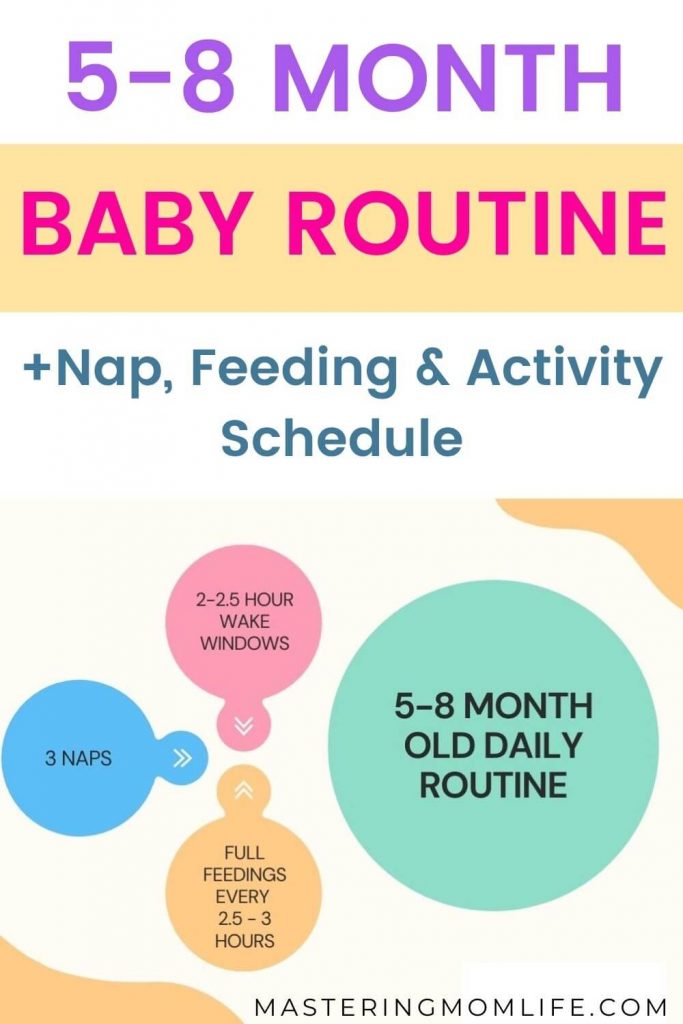
5-8 Month Baby Routine + nap, feeding and activity schedule

 1. Wake windows

Wake windows are the length of time that your baby is awake between each nap. It is counted from the minute they wake up to the minute they go back to sleep.

Wake windows will lengthen as your baby gets older. That’s why a newborn can only stay up for 30 minutes but a 10 month old will stay awake for 2-3 hours at a time.

Your baby’s wake window is a key foundation of their overall daily routine. The wake window will change as they grow but your little one will always have a wake window until they drop their last nap.

5-8 month old baby wake window is 2-2.5 hours.

I’ve noticed over the years that the first wake window is shorter, can even be 1.5hours to 2 hours. But as the day progresses, the wake windows lengthen a bit.

2. Activity time

You can do activity time anytime during your baby’s wake window. This activity time helps keep your baby stimulated and reaching new milestones!

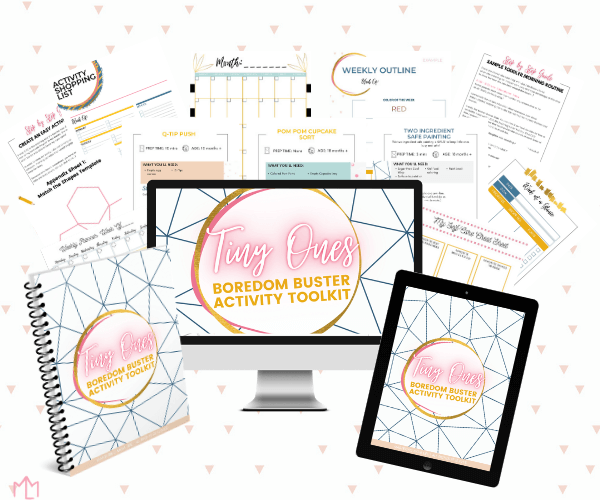
If you’re stumped with what activities you can do with your baby, check out my Tiny One’s Boredom Buster Activity Toolkit.

3. Feedings

At the 5-8 month old stage, babies usually eat 4-5 times throughout the day. Whether it be all formula/breastmilk or a combo of milk and solids.

In my 5-8  month baby routines, you’ll see how I feed my daughter throughout the day and how I structure her feedings.

The main key is to feed your baby every 2.5-3 hours.

You can read more about wake windows, tired cues, activity time, and hunger cues here!

Let’s jump into the sample schedule (what my day looks like with my 5-8 month old!)

5-8 Month baby routine + nap, feeding and activity schedule (5-8 month baby routine chart)

Sample 5-8 Month Baby Schedule

Remember this sample routine will change based on the time your baby wakes up that day. Your schedule will be determined by YOUR baby’s time frame.

You can keep with the overall structure of the day, but the schedule will shift based on your baby’s wake times, nap lengths, and feeding times.

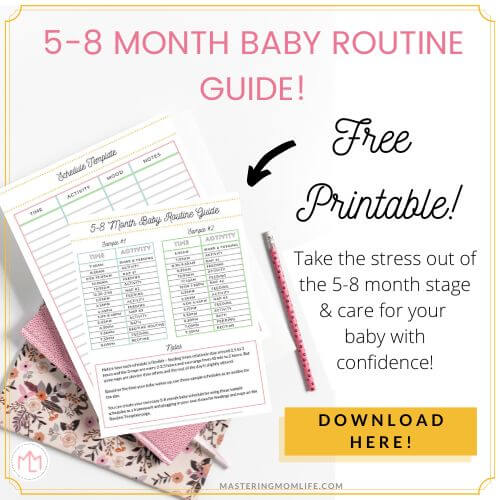
Be sure to download the 5-8 month baby Routine Guide so you have this sample schedule saved right to your device and have it at your fingertips when you need it!

The 5-8 month Routine Guide also comes with 2 sample schedules AND an instant download/printable template to help you make your own routine/schedule!

Use this schedule as a sample pattern for your own routine 🙂

7:30am Wake

I like to go into my baby’s room when she is stirring but not yet crying. I go into the room, turn off the sound machine, sing our good morning song and open the curtains. Next is changing diaper.

7:35am Feeding

She usually drinks about 4-5 ounces every morning when she wakes up. Sometimes she will drink 4 ounces and then drink the other ounce over the next half hour.

8:00am Breakfast

I make breakfast for my toddler at this time and give my 5-8 month old her “breakfast”. At 5-6 months old she won’t eat solids at this time but from 7-8 months old she’ll have some age-appropriate cereal pieces.

8:30am Connection Activity

After breakfast is our first activity time! This activity time is all about connection and bonding.

Below under the Connection Activities section, I share all of the different easy activities that I rotate each week.

We’ll play together for about an hour (my toddler too!) and then I’ll watch for her tired cues to start our nap routine.

Baby activity books
7:30-9:00am Wake window

This wake window is usually about 1.5 hours. As she approaches 9 months, she may be awake for 2-3 hours depending on how she adjusts to wake lengths.

Remember, flexibility is key when reading your baby’s cues!

9:00am Nap #1 (Ends 10:40)

We start a nap routine about 10 minutes before her nap time. Always follow your baby’s tired cues. She will usually sleep for about 1.5 to 2 hours this nap.

(If your baby is not sleeping this long for this first nap, that’s okay! Remember every baby is different and a lot of factors go into sleep- swaddles, feedings, sleep associations etc.)

10:45am Feeding & Mid-morning snack

When she wakes from her nap I usually give her another 4-ounce bottle. Remember, we feed our baby every 2.5-3 hours depending on their hunger cues. This amount increased as she reached 7-8 months old.

I’ll give her a puree of some sort with the rest of her milk. She likes the combination of milk and solids at this age.

If you’d like to see my homemade baby applesauce recipe, follow me on Instagram and check out my highlights!

11:00am Activity (outside/errands)

This activity time is usually an outside activity. If the weather permits, I like to get outside at least once a day. If it’s raining or we’re unable to go out, I like to encourage some independent playtime.

This is the wake window that I usually go out if I need to run an errand or drive somewhere. It’s a good amount of time to be out and a good time to be out with kids (less traffic, less people out, etc.)

12:30pm Nap #2 (Ends 2:00)

This nap can be longer if your baby slept shorter in the morning or it has the ability to be shorter if the morning nap was longer. Don’t stress!

2:00pm Feeding

The last feeding was around 10:45, which is now 3 hours ago. Some babies may wake up early from this nap due to hunger. If you notice this happening, you can feed your baby before the nap so they are going to sleep full. As your baby gets older each week/month, that feeding will drop and stretch to when they wake up.

2:30pm Activity

After baby is all energetic from her nap and full from her feeding, activity time again! I like this activity time to be a combination of independent playtime and chore time. I’ll get some chores done in the same room that Baby R is playing in.

4:00pm Feeding

This milk feeding fades away as your baby grows between 9-12 months but I wanted to keep it in this schedule just in case it helps you better see the overall feeding routine we had. At this time Baby R would drink 4 ounces and mostly eat solids as she turned 1.

4:00pm Nap #3 (Ends 5:00)

It’s time for the final nap of the day! This nap will eventually be the next to drop so sometimes it can get shorter as your baby approaches 9 months. Sometimes this nap is just 35-45 minutes, that’s okay!

Just remember to follow those tired cues and hunger cues.

This nap can be a real struggle around 6/7 months. But because it’s not quite time to drop it, it’s okay to let your baby sleep during this nap in the best way that would make them comfortable. Maybe that means baby wearing or holding to sleep or even an on-the-go nap in the stroller.

But your baby still needs that 3rd nap to make it to bedtime without getting super overtired so get it in however you can!

5-8 month baby routine- baby activity picture
5:00pm Feeding/Dinner

We always include the baby in our dinnertime. We pull up the highchair and eat as a family! If your baby isn’t eating solids yet, we still include her in our family meal time. When it’s time for solid, we would give her different amounts of food based on her food intake from the day and how hungry she seems.

5:30pm Activity

We have our family time in the early evening after dinner. We’ll clean up, play around the house and let them move around before we start our bedtime routine.

6:30pm Bath/Bedtime Routine

A consistent bedtime routine is the golden nugget of great nighttime sleep. We start out our bedtime routine with a:

  • Bath time (you can read my bath routine here)
  • Pajamas
  • 10-minute connection playtime
  • Last feeding
  • Close curtains / make room dark
  • Turn on sound machine
  • Lay baby down
  • Sing a song
  • Parent leaves room

Having a bedtime routine helps your baby understand that it is time for nighttime sleep. It creates an atmosphere of calmness and signals your baby it’s time for sleep. You can read all about the amazing benefits of a bedtime routine here!

7:15pm Feeding

This is the last feeding of the day. It’s uncommon for your baby to drink more ounces at this feeding than the rest of the day. We usually snuggle up, feed baby R and then get ready for bed—we’re almost done for the day!

7:30pm Nighttime Sleep

After baby finishes their feeding, gets changed and is all comfy, it’s time for sleep- woohoo!

Remember to download the FREE 5-8 Month Routine Guide to instantly download a sample daily schedule, nap schedule, and full feeding schedule!


Related Reading:

Newborn to one year old sample schedules

5-8 Month Baby Routine Key Principles-

Within this sample schedule here are 3 constant keys:

  • 2-2.5 hour wake windows
  • 5 feedings (combination of milk and solids)
  • 4 activity times

Let’s jump into the different activities you can do with your 5-8 month old during the day…

5-8 Month Activity Routine

Don’t become overwhelmed with prepping “activities” for your baby. An activity can be anything from a stroll around the block to a planned or playing with spoons. There’s a lot of room for interpretation about what you can do with your baby at this age.

I find that a lot of moms become completely overwhelmed with how to entertain their little one because they feel they “aren’t doing enough”.

It’s very frustrating to feel like you have to get a mile-long chore list done every day AND plan super fun, educational 3 hour activities for your baby.

But you don’t have to!

Check out this Activity Toolkit filled with things you can do with your baby that takes less than 10 minutes to prep and uses things you probably already have in your home 🙂

Tiny Ones Boredom Buster Activity Toolkit- activity toolkit for babies and toddlers

5-8 Month Sleep Schedule

As you can see in this daily routine, Baby R naps twice a day with 2-3 hours of daytime sleep and sleeps 11-12 hours each night.

Nap #1 : 9:00-10:40am

Nap #2 :12:30-2:00pm

Nap #3 : 4:00-5:00pm

Bedtime: (fall asleep) 7:30/7:45

Your baby’s nap times and nap lengths will begin to shift in between the 3 months of when they are 5-8 months. That’s why knowing your baby’s tired cues are super important.

Some tired cues include:

  • Rubbing eyes
  • Playing with ears
  • Red eyebrows
  • Gazing off
  • Slow blinking
  • Yawning
Baby Nap Routine- nap routines signal that it's time for sleep

5-8 Month Old Nap Schedule

At this age, babies are usually having 3 naps a day.

The third nap of the day is usually a “cat nap” ranging from 30-45 minutes, but it can sometimes last for an hour as well. This nap helps get your baby to bedtime, so bedtime isn’t really early, making baby an early riser.

Bedtime might have to be pushed up or back some days depending on when your baby wakes up from this nap.

As your baby’s wake windows lengthen, this nap will be dropped and bedtime will stay the same.

This nap is dropped somewhere between 7-9 months. The “sleep needs” for every baby is different so if your little one is still cat napping for the third nap and nighttime sleep is not affected, go for it.

If your little one is still too young to drop this nap but you begin to see the third nap is a struggle, try to get creative with helping your little one fall asleep for this nap so you can hold on to it a little longer. Most babies who are too little for only 2 naps a day can’t make it the 3-4 hour wake window until bedtime.


Related Reading: How to start a nap schedule with your baby

5-8 Month Feeding Schedule

At 5-8 months old, your baby is eating a combination of milk (breastmilk/formula) and solids. My daughter eats every 2.5-3 hours, whether it’s a mix of milk and solids, just solids, or just milk.

Remember to continue to complete full feedings!

My pediatrician recommended I begin to introduce solids to her at around 5.5 months. I would give one type of puree vegetable per week and offer it to her once a day.

Follow your pediatrician’s guide on what your baby should be eating and follow your baby’s hunger cues.

Recap time!

There you have it

You learned my step-by-step easy and flexible 5-8 month baby routine, including nap, feeding, and activity schedule, to help your baby thrive!

This 5-8 month baby routine was created to flourish communication & connection with your baby without feeling overwhelmed with questioning yourself if you are “doing the right thing” for your baby all day.

YOU know your baby best! Follow your instincts and follow your baby’s cues—they will never fail you <3

Don’t forget to download the 5-8 Month Routine Guide equipped with schedules and templates to help you create your own routine based on your baby’s cues!

You got this, mama!

Always With Love, Brianna

Read more routine / baby schedule posts!

Sample 0-12 Month Old Sample Routine

Newborn 0-4 weeks old newborn routine

1-4 Month Baby Schedule Routine

9-12 Month Baby Routine

12-18 Month Baby Schedule

Why a schedule for your baby is so important

June 27, 2022 · Leave a Comment

4 Essentials to a Successful, Easy Baby Routine

Baby Routines

4 keys to a successful baby to toddler routine

Inside: Learn the 4 key baby routine essentials that makes up a perfect foundation for an easy, effective, flexible routine that will grow with your baby from infant to toddlerhood.

Whether you wake up and zombie walk your way to the kitchen for a steamy cup of coffee or your race to the bathroom to begin your morning self-care, every day begins with some sort of routine.

The same is for babies!

Don’t let the word “routine” scare you away…

A baby routine is simply a set of predictable patterns that your baby does each day including sleeping, waking, eating, and playing.

A routine is NOT a minute-by-minute schedule that makes you feel chained to the clock.

I can teach you a super simple, effective, and efficient baby routine that can grow with your baby all the way into toddlerhood!

Here’s the gist…

There are 4 important, unchanging essentials that your baby’s routine will consist of:

  1. wake windows,
  2. sleep
  3. feedings
  4. activity time

You will navigate your baby’s day using these 3 routine essentials by following your baby’s cues.

We’ll use the 3 C’s for the foundation of all baby routines: Connection, Communication, and Confidence.

You’ll deepen your connection with your little one, which helps you further understand their communication with you, which ultimately gives you the confidence to care for them!

Let’s jump in!

How to start a baby routine

First things first, how do you even start a routine with your baby?

The answer is simple- cues!

Your baby is constantly communicating with you, even though they cannot talk yet. Their screams, cries, and coos all mean something that they are trying to tell you. As your baby grows week by week and your bond deepens, you will begin to understand your baby’s cues and communication.

Cues are the only way a baby can communicate with you. When you follow your baby’s cues, you are offering them what they need, when they need it in order to thrive.

Follow your baby’s cues…it’s their way of communicating with you and telling you what they need.

We’ll talk more about tired cues, hunger cues, and playtime cues in this post too!

Are you overwhelmed with juggling your daily #momlife to-do list AND your baby’s activities? Grab my FREE Mommy & Me Mini Planner and take control of your day!

4 Baby Routine Essentials

These 3 baby routine essentials will help you create your own flexible baby routine completely tailored to YOUR little one.

No time to read this now? That’s ok! Save it to your Pinterest Board to read later

1. Wake windows- What is a “wake window”?

A wake window is simply how long your baby is up between each nap. It is counted from the length of that that they wake up from one nap until thy go back to sleep for the next nap.

That stretch of awake time is called a “wake window”.

These wake windows will stretch as your baby continues to grow and get older. 

Wake windows will lengthen as your baby gets older. That’s why a 2 week old can only stay up for 30 minutes but a 1 year old will stay awake for 3-4 hours at a time.

Your baby’s wake window is the foundation for their general daily routine. Even though the wake windows change and lengthen, they will always have one until they are no longer napping (well into toddlerhood).

Baby Wake Window Chart:

1-4 Months Old: 30-60 minutes wake window

5-8 Months Old: 90-120 minutes wake window

9-12 Months Old: 2.5-3.5 Hours wake window

Mom Tip: In my experience, I’ve noticed over the years that the first wake window tends to be shorter. But as the day progresses, the wake windows lengthen a bit.

If your little one is starting to show tired cues and it’s 15-20 minutes before their wake window should end, don’t be afraid to begin the nap routine.

You should pay super close attention to keeping your baby up for the full wake window when they are showing signs of going through a transition- such as dropping a nap, early wakings, night wakings, etc.

Tired Cues

Let’s talk about tired cues—because these are the cues you are going to follow that will show you the optimum time your baby is ready for sleep. That way you’re not wrestling your baby to sleep when they aren’t tired or dealing with red-faced screaming because they are overtired.

As the end of the wake window approaches, ask yourself, “Are they showing your sleepy cues?”

Tired cues include:

  • Rubbing eyes,
  • staring off into space,
  • red eyebrows,
  • slow blinking
  • staring off into space
  • & general fussiness with these other cues.

The main goal is to offer your child the nap to prevent overtiredness- which can lead to extreme fussiness, over hyper activity, and refusing to sleep.

Sometimes my baby can make it a full 2-hour wake window in the morning but sometimes she starts showing those tired cues early and I follow what she needs.

Utilizing an easy nap routine can help signal to your baby that a nap will soon follow those tired cues.

Did your baby wake early and is showing tired cue signs but it’s not nap time yet? Has your baby been up way too long and they are starting to get fussy?

Use your discretion and information from other parts of the day to figure out what those cues are telling you.

That’s the advantage of a flexible routine- it’s about YOUR BABY. Not a schedule designed for another child.

You can read more about sleep cues on Taking Cara Babies (I’ve used these courses when I first started my motherhood journey- and I am NOT an affiliate, just really enjoyed the information)

What do I do during a wake window?

When you’re baby is awake, you’re not simply just staring into space- your baby is very active!

Wake windows are filled with feedings, usually followed by playtime or activities. We’ll talk more about the easy activities you can do to fill these wake windows.


Related Reading: Complete Sample Routine for 0-12 Months

2. Sleep

Naturally, the next baby routine essential is sleep. Of course, sleep is an essential part of life but especially for your baby!

After you know your baby’s wake window, next is to observe their sleep patterns and length.

Another key to better, longer sleep is a nap routine and a bedtime routine. These routines will help signal your baby that it’s time for sleep.

A naptime routine will signal that it’s time for daytime sleep and a bedtime routine will signal that it’s time for nighttime sleep, a much longer stretch of sleep.

Just as wake windows will lengthen, daytime sleep will shorten. As your baby grows and develops, they will begin to stay up longer during the day, therefore sleeping less and having fewer naps.

It’s important to know those wake windows, number of naps and nap lengths because that will give your baby the optimum opportunity to receive all of their needed sleep time.

Here is an overview of the number of naps and nap lengths by age:

1-4 Months Old: 4 naps

5-8 Month Old: 3 Naps

9-12 Months Old: 2 Naps

14-18 Months Old: 1 Nap

Not ALL days your baby will sleep the same exact way. Don’t be alarmed when your baby’s sleep shifts from day to day or week to week. That’s why we put routines in place, to send your baby those signals without feeling like you aren’t meeting their needs.

Sleep can change due to transitions, teething, sickness, etc.

Your job is to simply offer your baby a nap. It is up to them to take it!

3. Feedings

It’s no secret that babies love to eat! They actually eat allll dayyy loonnggg. My toddler still loves to snack 50 times a day 🙂

Babies usually eat 4-5 times throughout the day and just like with sleep, their full feeding routine will change as they continue to grow.

An infant may cluster feed every hour for the first few weeks of life. But as they develop, those feeding begin to consolidate and they are eating more quantity of food less quantity of time. As your baby grows, these feedings will be a mixture of liquids and solids, with your baby’s milk (breastmilk/formula) decreasing as solids increase.

A 3 year old won’t have 4 milk bottles a day like a 9 month old would…but you also don’t jump to those transitions abruptly. They change and stretch over time. That’s why feeding is one of the baby routine essentials. It’s one of the fundamental things your baby will do from birth and beyond.

Sample Feeding Amounts

The main key is to feed your baby every 2.5-3 hours. (Whether that’s fully breastmilk/formula or a mixture of solids and milk or just solids.)

0-6 months old– feed breastmilk/formula every 2.5-3 hours (no including cluster feeding sessions)

6-9 months old– feed a mixture of breastmilk/formula every 2.5/3 hours with adding a “meal” with solids (puree or baby led weaning)

9-12 months old– feed a mixture of breastmilk/formula every 2.5/3 hours with adding 2 “meals” with solids

12-18 months old– (can begin drinking cow milk and reduce milk feedings based on pediatrician guidelines) baby will eat about 3 solid meals a day with milk feedings being decreased as you see fit

18-24 months old– As baby grows and develops, they will drop “milk” feedings and begin to follow a toddler feeding schedule

These feeding amounts are purely for an overview of what a feeding routine will look like. But feeding is based on your baby’s hunger cues.

Always check with your child’s pediatrician/dietician/lactation consultant before making changes to feedings.


Related Reading:

How to Know if Your Baby Had a Full Feeding | Full Feeding Newborn | Full Feeding Schedule | Baby Feeding Tips | Baby Feeding Schedule | Baby Feeding Tracker | #babytips #parentingtips #newmom

Hunger Cues

Your baby will send you “signals” when they are hungry, just like they do when they are tired. These hunger cues will tell you when your baby is ready to eat and help you create a personalized feeding routine just for YOUR baby.

That’s why “sample” feeding schedules are hard to follow. Every baby is different. It’s important to follow your own little one’s hunger cues.

Hunger cues include:

  • Mouth opening (as if to suck)
  • Irritability after 2.5-3 hours from the last feeding
  • Puts hands to mouth
  • Licking lip or puckering/smacking lips

4. Activity Time

Last but not least, the final baby routine essential foundation is activity time. This time is also called playtime!

Playtime gives your baby the ability to reach new milestones and strengthen and practice existing skills. It overall allows your baby to “get the wiggles out” and fill that wake window before their next nap.

This is a great time to practice those skills such as tummy time, strengthening the neck, learning to sit up, cruising/crawling, etc.

Fill this activity time with a combination of:

  • Independent playtime– activities your baby can do by themselves in a safe, supervised location
  • Connection playtime– activities you and your baby do together to strengthen your connection and deeper your bond
  • Reading time– reading to your baby and allowing them to follow along/flip pages
  • Exploration– allowing your baby to explore new textures, areas, and sensory items
  • Imaginative play– giving your baby objects to help them grow and enhance their imagination

Activities can be used to reach new milestones, practice existing skills and strengthen/support developmental growth.

Tiny One’s Boredom Buster Activity Toolkit

Say goodbye to taking 45 minutes to prep a super complicated activity that your baby is going to play with for only 5 minutes…

Here’s a whole goldmine of fun, easy, affordable activities that will take you less than 10 minutes to prep AND that your little one will have a blast doing!

Make baby and toddler activities easy with the Tiny One’s Boredom Buster Activity Toolkit!

With over 35 activities for babies and toddlers from 2 months old to 3 years old, and over 10 templates to help you create an easy playtime activity routine that works for YOUR family, this activity toolkit is your life raft back to sanity!

Find out more about the Tiny One’s Boredom Buster Activity Toolkit here!

Practical Baby Routine Essentials

As an Amazon Associate I earn from qualifying purchases. Please view Mastering Mom Life’s Terms, Disclosure & Disclaimer Policy and Privacy Policy. I wholeheartedly believe in all of the products I recommend and use them all! 

If you truly want to support every aspect of your baby’s daily routine, here are some home essentials that I use every single day that makes my routine run smoothly:

  • Blackout Curtains
  • Sound machine
  • Boon Bottle Drying Station
  • Swaddle
  • Sleep Sack
  • Hatch

Successful Baby Routine Recap

Remember, there are 4 foundational, essential components of your baby’s day that will be unchanging as they grow:

1. Wake windows

2. Sleep

3. Feedings

3. Activity time

These baby routine essentials will help you create a daily routine that is tailored right to your baby that also meets them where they are developmentally!

Keep the routines simple, efficient, effective, and working for YOUR family.

Don’t be afraid of the word “routine”….just think of it as the sweet creamer being added to your must-have cup of coffee every morning 🙂

You got this, mama

Always With Love, Brianna

Related Reading:

Bottle-Feeding Tips to Reduce Gas

How to Create an Easy Baby Routine in 4 Steps

How to Get Your Baby to Sleep In a Crib

May 17, 2022 · Leave a Comment

The Best Sample Baby Schedule Routine for Baby’s First Year

Baby Routines

0-12 Month sample Baby routine schedule

Inside: Find a simple, flexible sample baby schedule routine for babies newborn to 12 months!

Are you overwhelmed with juggling your daily #momlife to-do list AND your baby’s activities? Grab my FREE Mommy & Me Mini Planner and take control of your day!

If you’re looking for a simple, flexible routine for your baby, you’ve come to the right place!

These sample baby schedule routines are perfectly designed to meet your baby where they are developmentally and help your baby transition through the milestones they will soon undergo.

Routines will also give you the confidence you need to understand your baby’s communication cues, offer them what they need when they need it, and ultimately help you care for your baby in the best way possible…full of mom-fidece!

If you’ve ever wondered to yourself…

What is my baby supposed to do all day long?

How long are they supposed to sleep?

Is my baby full?

How do I know what they need?

These routines will help!

Below you will find a sample baby routine categorized by age:

  • Newborn (0-4 weeks)
  • 1-4 Months Old
  • 5-8 Months Old
  • 9-12 months Old

Let’s dive in…

3 Things Every Baby Routine Needs

No matter the age, every sample routine will have 3 key components.

  1. Full feedings: Feeding your baby until full to prevent “snacking” throughout the day. Learn all about how to make sure your baby is getting a full feeding and the signs to watch for.
  2. Wake windows: The amount of time baby is up in between naps.
  3. Sleep: Consists of daytime and nighttime sleep. Naptime routines and bedtime routines will help your little one sleep better and longer.

These 3 key components are the solid foundation for every baby routine.

When you can confidently track your baby’s naps, full feedings, and wake windows you’ll be able to see your baby’s natural routine. Then you can use your baby’s natural routine to create your own daily flow that helps you, your baby, and your family thrives.

Every family has different needs. And the good news is, you CAN create an easy, flexible routine for your baby that helps you meet your baby’s needs while establishing a healthy structure that will enable you to fulfill your personal responsibilities as well.

No time to read this now? That’s okay! Save it to your favorite Pinterest Board!

Sample Baby Schedule Routine for Sleep and Feedings

Here is a breakdown of a sample baby schedule routine for babies ages newborn to 12 months old. Including the approximate amount of daytime sleep, number of naps, average wake windows, and feedings.

Remember, no sample schedule will be “perfect” for your baby.

This is an overall guide to help you form your own routine and also help you understand your baby’s actions throughout the day.

Each daily routine begins with the time your baby wakes in the morning from their nighttime sleep. From there, you begin tracking the time in between feedings, naps, and activities during awake time.

Throughout the week, times may change or shift based on your baby’s morning wake time, but the overall routine will remain consistent. This is perfectly normal.

Our goal is to follow a routine based on your baby’s patterns of what they need, not follow the clock minute for minute based on a schedule.

Newborn / 0-4 Weeks

Read the detailed newborn and 1-4 Week Old Routine Here!

The warm cuddles, the sweet “baby smell”, the feeling of their curled body fitting perfectly into your chest—oh the precious newborn stage!

Newborns do not have “schedules”.

During this stage, feed your baby on demand, let them sleep as they need, and get in all of those kisses on their little button nose.

Use this time to get to know your baby and his/her needs. Try to learn their tired cues and hunger cues because those cues will be the way they are communicating with you (along with crying- but that’s okay, babies cry…it’s what they do!).

Begin to lay the foundation to help your baby understand daytime is light and nighttime is dark, so your baby easily starts to learn the difference between days and night. (So she isn’t up all night and sleeping all day—trust me!)

But don’t worry, you can still take some steps to set your newborn up for terrific sleep and full feeding success by doing simple things throughout the day.

1-4 Months Old

As your little one enters the 1-2 month old stage, don’t worry too much about a “detailed schedule”. You will see your baby fall into a routine that best suits them. Take this time to continue to learn your baby’s communication cues.

As your baby approaches the 3-4 month old stage, you will see a routine being formed that meets your baby where they are developmentally. Follow their cues to ensure optimal naps and full feedings.

Read the FULL detailed, step by step 1-4 Month Old Routine Schedule here.

Routine Based on Wake Windows and Nap Lengths:

At this age, babies are napping after only being awake for a short amount of time. Babies 1-2 months will nap after being awake for about 30 minutes and babies 3-4 months will nap approximately 45 minutes after waking.

After every waking, there is a full feeding, a couple of minutes of playtime and then baby usually goes back down for a nap.

As your baby gets older, their wake windows will lengthen and their naps will decrease.

Overall 1-4 Month Schedule Routine

Daytime Sleep: 4-5 hours (depending on age, nap lengths, bedtime, and night sleep)

Number of Naps: 4

Wake Window: 30-60min

Bedtime: 7:30-8:30

Full Feedings: Every 2.5-3 hours (cluster feeding is still common at this age)

5-8 Months Old

Routine Based on Wake Windows and Nap Lengths:

Nap 1 is usually 2 hours after morning waking and nap 2 is usually 2.5 to 3 hours after waking from nap 1. Bedtime is 3-3.5 hours from waking after nap 2. The morning wake time is usually the shortest, follow your baby’s tired cues to know when they are ready for the first nap.

Overall 5-8 Month Schedule Routine

Daytime Sleep: 3-4 hours

Number of Naps: 3

Wake Window: 2-3 hours

Bedtime: 7-8pm

Full Feedings: Every 2.5 to 3 hours (follow pediatrician’s recommendations for introducing solids)

The third nap of the day is usually a “cat nap” ranging from 30-45 minutes, sometimes an hour. This nap helps push your baby to bedtime, so bedtime isn’t super early and then your baby begins to become an early riser (ultimately waking you up at 5am—yikes!).

Bedtime might have to be pushed up or back some days depending on when your baby wakes up from this nap.

This nap is dropped somewhere between 7-9 months. Every baby’s “sleep needs” are different so if your little one is still catnapping for the third nap and nighttime sleep is not affected, go for it.

If your little one is still too young to drop this nap but you begin to see the third nap is a struggle, try to get creative with helping your little one fall asleep for this nap so you can hold on to it a little longer. Most babies who are too little for only 2 naps a day can’t make it the 3-4 hour wake window until bedtime.


Related Reading:

9-12 Months Old

Routine Based on Wake Windows and Nap Lengths

Nap 1 is usually 2.5-3 hours after waking in the morning and nap 2 is 3 hours after waking from nap 1. Bedtime is usually 3-3.5 hours from waking after nap 2. Bedtime can shift a bit depending on when your little one woke up from nap 2.

No wake time is perfect…always follow your baby’s cues so you prevent them from being overtired but are also not putting them down too early for a nap when they aren’t tired yet.

Read the full, detailed 9-12 Month Old Routine Here!

Overall 9-12 Month Old Schedule Routine

Daytime Sleep: 2.5-3.5 hours

Number of Naps: 2

Wake Window: 2.5-3.5 hours

Bedtime: 7-8pm

Full Feedings: Every 2.5-3.5 hours mix of breastmilk/formula and solids

Newborn to 1 year old sample schedules. Image of baby in sink bath with mom

0-12 Month Sample Baby Schedule Overview

Want this sample schedule in bit-size form? Yay for charts! Here you can see the breakdown of naps, wake windows, and full feedings for each age group.

AGEDAYTIME SLEEPNUMBER OF NAPSWAKE WINDOWBEDTIMEFULL FEEDINGS
1-4 Month Old:4-5 hours430-60 minutes7:30-8:30 pmEvery 2-3 hours
5-8 Month Old:3-4 hours32-3 hours7-8 pmEvery 2.5-3 hours
9-12 Month Old: 2.5-3.5 hours22.5-2.5 hours7-8 pmEvery 3-3.5 hours

My Baby’s Routine is Suddenly Changing? Now what!

Whenever your baby’s normal routine starts to waiver, such as short naps or early morning wakings, or unusual fussiness, you’ll be able to compare and contrast your baby’s behavior based on their routine and pinpoint what could be causing it.

Maybe your little one is teething or is getting sick or is in a state of transition to longer wake windows and dropping a nap.

Having a solid but flexible baby routine will give you the confidence you need to know when something is “off” and give you the assurance you need to help you guide your baby through whatever they are experiencing.

When you see your “normal routine” starting to fall apart or change, then you can begin to cross off different possibilities of what your baby is experiencing. If it’s not something temporary, like teething or illness, then maybe it’s time to pivot your routine.

sample baby schedules newborn to 1 year old. Image of baby in high chair at table.

Testing Routines for Wake Windows and Optimum Naps

If you see your baby is not thriving on a routine, always use your instincts.

If your baby is napping too short, always ask yourself “were they tired enough?”. If your baby is taking a long time to fall asleep and is overly fussy, ask yourself “was he/she overtired?”. By learning your baby’s tired cues, you can know when they are ready for sleep and by doing this you are ensuring they are getting the optimum amount of comfortable sleep.

Once you see how long your baby needs to stay up and then nap, you begin to create a routine based on YOUR baby’s wake windows that allow you to meet your baby where they are developmentally. Don’t be afraid to shift times if you see your baby is miserable (and you’re miserable too!)

When baby is happy, mama is happy 🙂

Free Baby Tracker and Mom Planner
FREE Mommy & Me Mini Planner Printable Downloads!

The BEST way to create your baby’s own schedule routine is to begin to track your baby’s activities. By first getting an understanding of what your baby is already doing, you can see what direction you need to go.

To help you EASILY track your baby’s sleep, naps, feedings, and playtime, I created a Mommy & Me Mini Planner!

Stay organized and productive by keeping track of your own to-do list while ALSO tracking your baby’s sleep, feedings & activities.

A FREE instant download that you can print and view on any device!

Includes:

  • Daily Baby Journal
  • Mommy & Me Daily Planner (side by side view of your and baby’s routine)
  • Master Baby Schedule Template
  • Weekly Planning Tameplate
  • Monthly & Annual Panning Template

Get it free now!

Sample Baby Schedule Routine 1-12 Month Recap

Flexible routines offer your little one the predictability and stability they need to grow and also help you confidently learn your baby’s cues. From feedings to naps to playtime, these routines can bring a thriving structure to your day!

In this post there was a sample baby schedule routine categorized by age:

  • Newborn (0-4 weeks)
  • 1-4 Months Old
  • 5-8 Months Old
  • 9-12 months Old

Be sure to save this post so you can easily find it again as your baby continues to grow!

Remember, you’re the best mama for your little one—YOU know your baby best.

You got this, mama!

Always With Love, Brianna
Related Reading:
  • Easy Newborn Tips
  • How to Get Your Baby to Sleep In a Crib
  • How to start a nap schedule with your baby
  • Why a schedule for your baby is so important
  • What My Baby’s Daily Schedule looks like
  • Greatest Newborn Essentials to Make Mom Life Easier

February 18, 2022 · Leave a Comment

  • « Go to Previous Page
  • Go to page 1
  • Go to page 2
  • Go to page 3
  • Go to page 4
  • Interim pages omitted …
  • Go to page 29
  • Go to Next Page »
  • Privacy Policy
  • Cookie Policy
  • Terms, Disclosure & Disclaimer Policy
  • About Me
  • Contact
  • As an Amazon Associate, I earn from qualifying purchases.

Copyright © 2026 · Glamour Theme by Restored 316